

That duck's not a mallard! It's a wigeon
Mallards are California’s most common duck, but they are often confused with the American Wigeon. Here's how to distinguish the two waterfowl by size, flight patterns, and vocalizations.


To clarify, the ducks in the picture above are, in fact, mallards.
But the duck in the video below is not a mallard. It's an American wigeon.
What's the difference between a mallard and a wigeon?
According to the the USFWS Ducks at a Distance Waterfowl ID Guide, separating these two common ducks usually comes down to checking a few key categories: size, flight behavior, and sound.
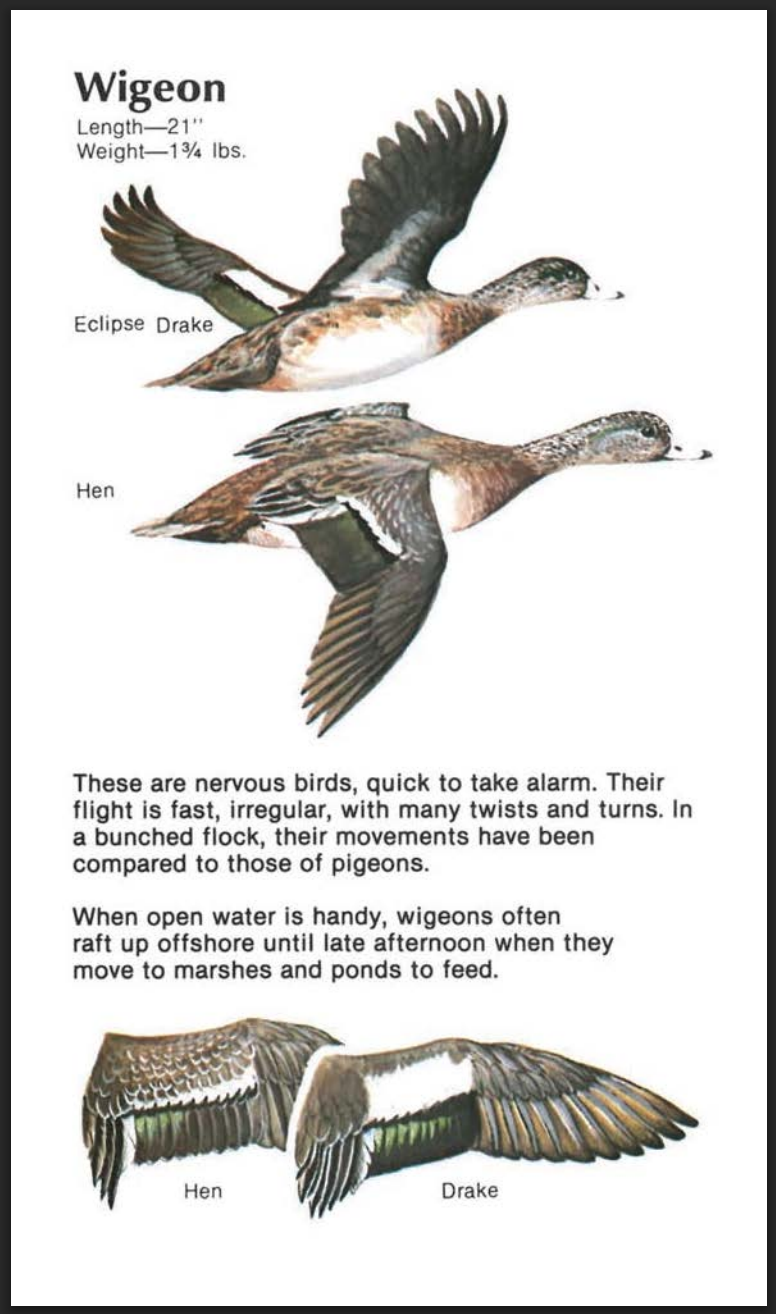
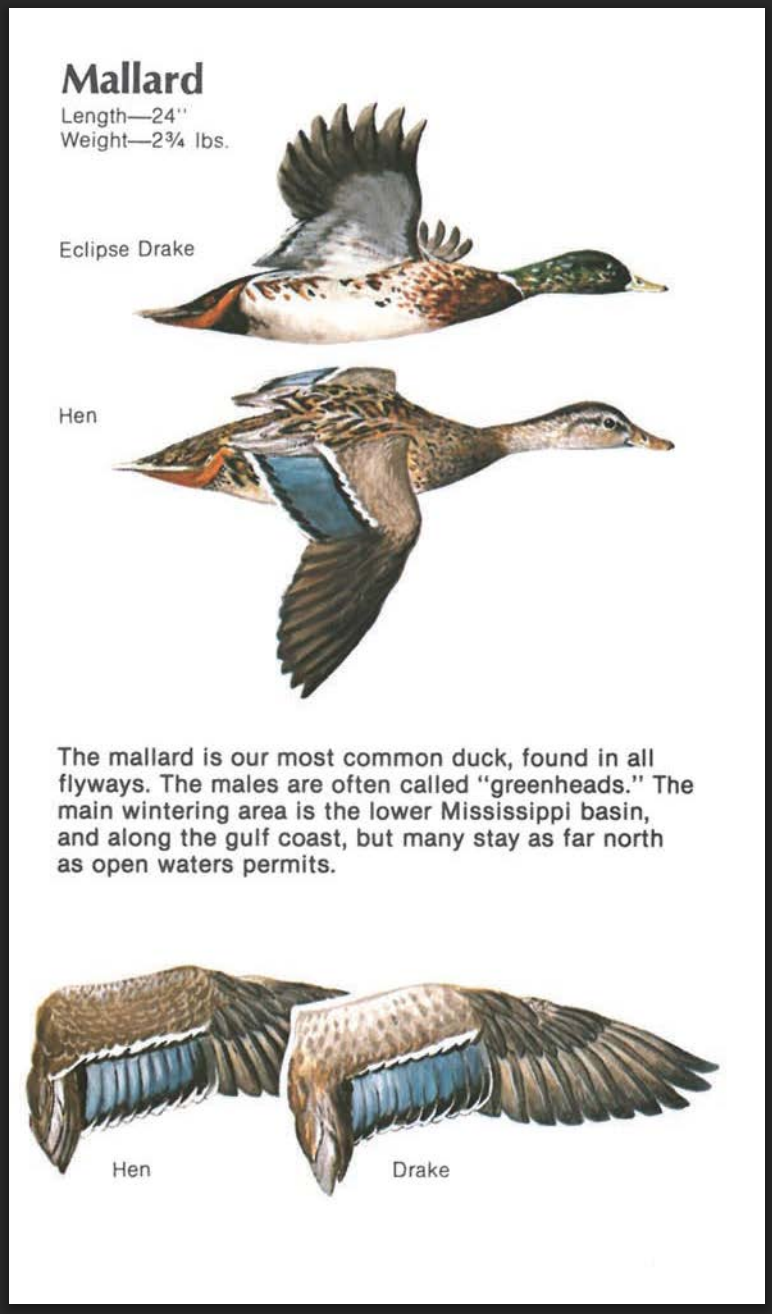
Size and Weight
The Mallard is the significantly larger bird of the two. A typical Mallard reaches about 24 inches in length and weighs roughly 2 ¾ pounds. By comparison, the Wigeon is lighter and more compact, generally measuring 21 inches and weighing in at only 1 ¾ pounds.
Flight Patterns
You can often identify a Wigeon just by its energy in the air. The guide describes them as "nervous birds" that are quick to react to danger. Their flight is erratic, fast, and full of twists and turns; in fact, the USFWS notes that when they bunch together in a flock, their movements have "been compared to those of pigeons."
Mallards, conversely, are much steadier. Their flight is described as "not particularly rapid," lacking the nervous, darting maneuvering of the Wigeon.
Field Marks
While the Mallard drake is famous for his green head, the Wigeon drake has his own distinct markers: a white belly and forewing that are "very showy" during flight.
Vocalizations
If you are listening rather than looking, the drakes are easy to tell apart. The male Wigeon produces a whistle, whereas the male Mallard has a low-pitched call described as kwek-kwek. The hens of both species are louder, but distinct: the female Mallard gives the classic loud quack, while the female Wigeon makes a kaow or lower qua-awk sound.
Habits
Their daily routines also differ slightly. Mallards are often found feeding in harvested fields in the early morning and late afternoon, returning to marshes or creeks to roost at night. Wigeons, however, prefer to "raft up offshore" when open water is available, waiting until late afternoon before moving into the marshes and ponds to feed.


