

How to access no-cost children's vaccines in California: 2025-26 guide to VFC eligibility
Everything you need to know about the federal safety net that guarantees access to immunization, from eligibility rules to safety protocols.


For parents navigating the healthcare system, costs can feel opaque and overwhelming. But when it comes to immunizations, there is a massive, federally funded safety net designed to ensure money is never the reason a child goes unprotected.
The Vaccines for Children (VFC) program was born out of a crisis—a measles epidemic in the early 1990s that exposed dangerous gaps in vaccine coverage. Congress stepped in to create a program that now serves as the backbone of pediatric public health. It allows eligible children to get their shots at their regular doctor’s office rather than being referred out to fragmented public health clinics.
If you are uninsured, underinsured, or navigating Medi-Cal, here is exactly how the program works, and the rigorous standards providers must meet to serve your family.
Sources & References
This guide is based on the following federal guidelines, safety protocols, and immunization schedules:
- Primary Operations Protocol: CDC Vaccines for Children (VFC) Program Operations Guide (2024-2025) The official 100+ page federal manual detailing provider requirements, storage safety protocols, and eligibility rules.
- Eligibility & Parent Information: CDC VFC Information for Parents Comprehensive breakdown of eligibility categories, associated costs, and how to find enrolled providers.
- Provider Guidelines: CDC VFC Information for Healthcare Providers Details on enrollment, annual training requirements, and administrative fee caps.
- Program Overview & History: About the VFC Program Background on the program’s creation following the 1989-1991 measles epidemic and its funding structure.
- 2025 Immunization Schedules:
Eligibility: The Four Categories
The program serves children through 18 years of age. Eligibility is determined by federal guidelines, meaning if your child falls into one of these categories, they qualify for vaccines at no cost to you:
- Medicaid-Eligible: Children who are enrolled in or eligible for the Medicaid program (often referred to as Medi-Cal in California).
- Uninsured: Children who have no health insurance coverage at all.
- American Indian or Alaska Native: As defined by the Indian Health Care Improvement Act.
- Underinsured: This category includes children who have health insurance, but the policy does not cover vaccines, does not cover all recommended vaccines, or has a fixed dollar cap for vaccine coverage.
Crucial Restriction for Underinsured Families:
If your child is "underinsured," you generally cannot receive VFC vaccines at a standard private practice. You must visit a Federally Qualified Health Center (FQHC), a Rural Health Clinic (RHC), or a provider with a specific deputization agreement.
Costs and Fees
The vaccines themselves are purchased by the CDC at a discount and provided at no cost to the provider and the patient. However, parents should be aware of potential associated costs:
Administration Fees: Providers are permitted to charge a fee to administer the shot. However, this fee is capped by the federal government based on a regional scale.
Office Visit Fees: Providers may charge for the office visit itself or unrelated services (like an eye exam).
The "Inability to Pay" Rule: By law, VFC providers cannot deny a vaccine to an eligible child simply because the parent or guardian is unable to pay the administration fee.
What Is Covered?
The program covers vaccines recommended by the Advisory Committee on Immunization Practices (ACIP). This includes protection against 19 vaccine-preventable diseases, such as:
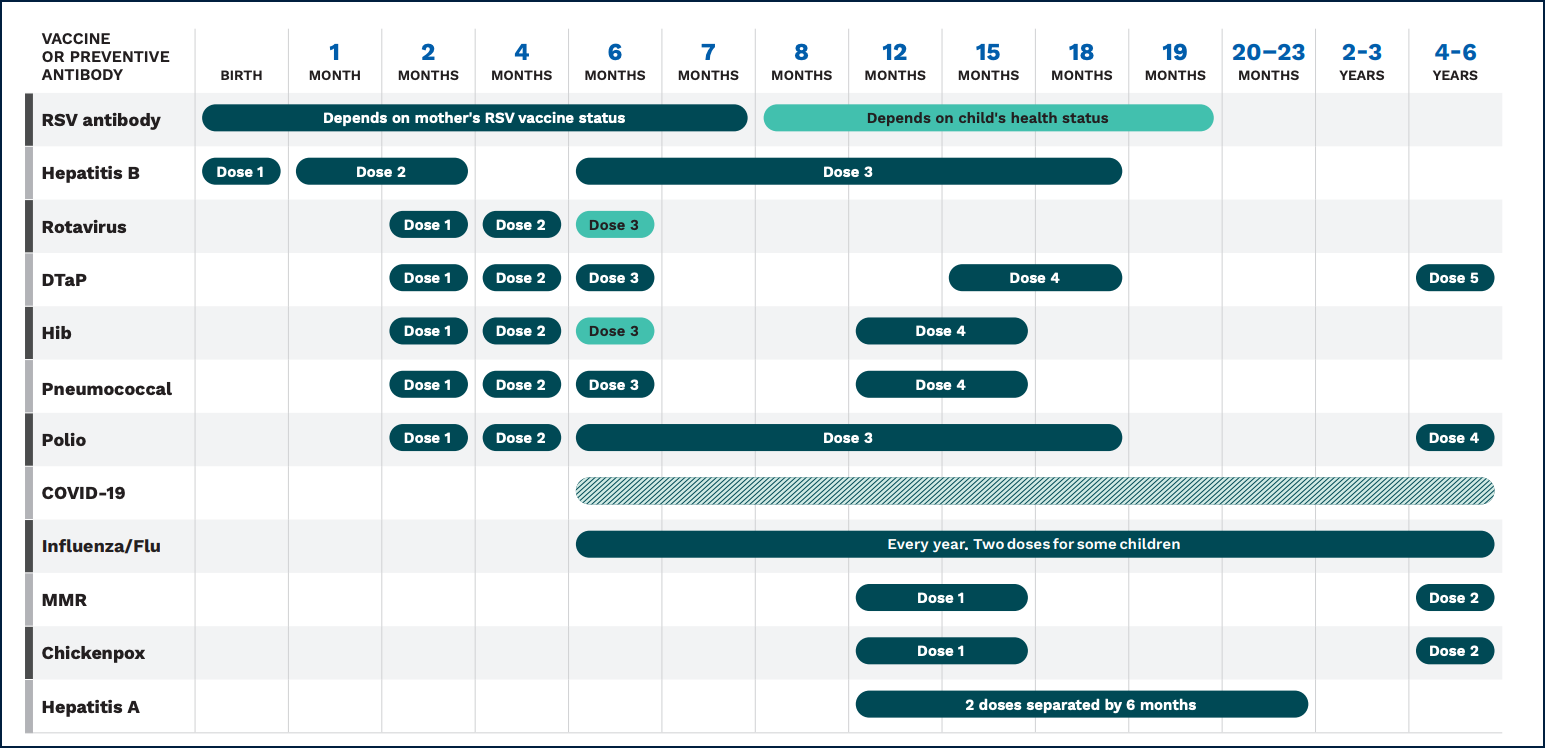
- Diphtheria, Tetanus, and Pertussis (DTaP): 5 doses for children up to age 6.
- Measles, Mumps, and Rubella (MMR): 2 doses starting at 12-15 months.
- Polio (IPV): 4 doses starting at 2 months.
- Hepatitis A & B: Multi-dose series starting at birth (Hep B) and age 1 (Hep A).
- Respiratory Syncytial Virus (RSV): Now included for infants depending on maternal status and health.
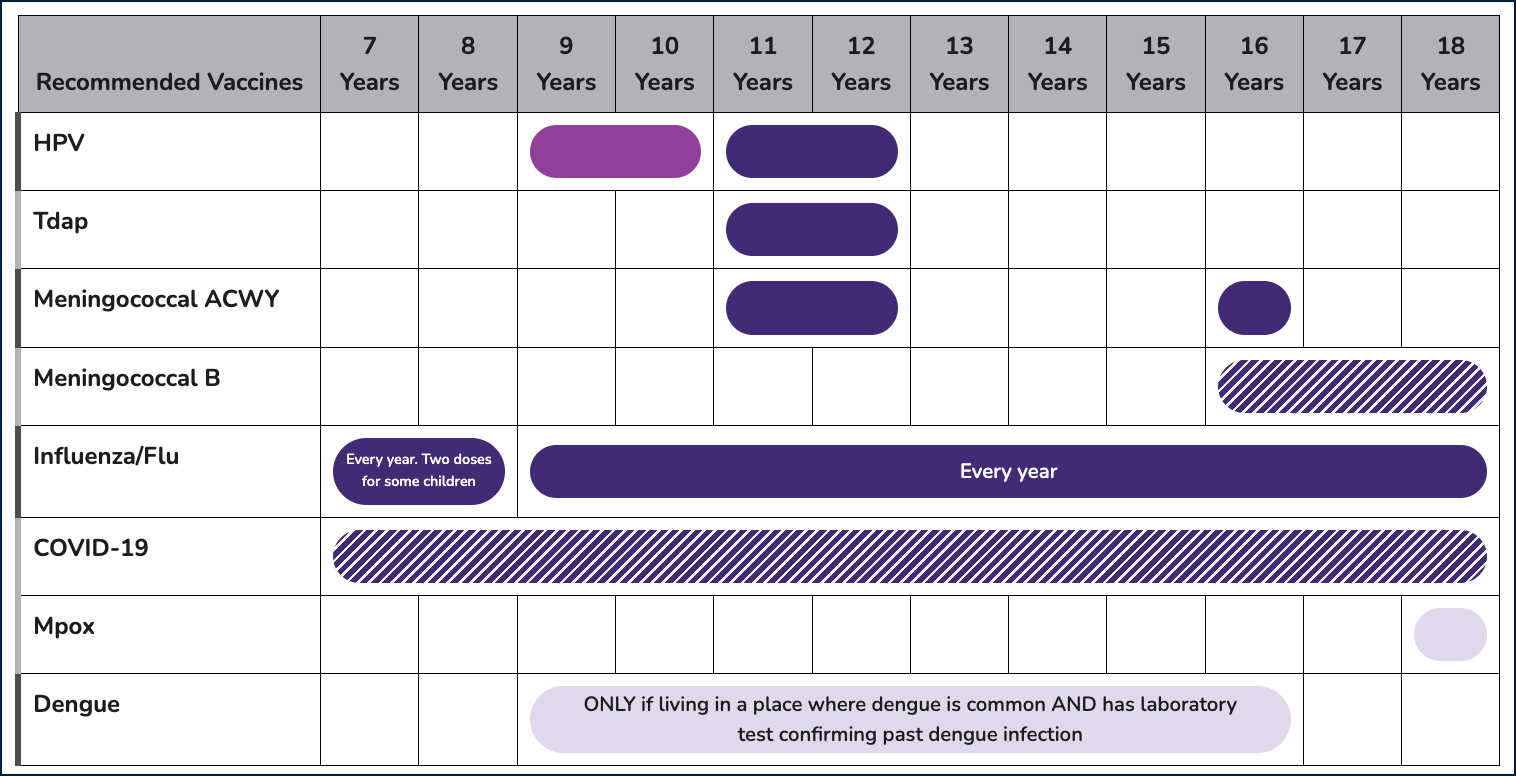
- Flu and COVID-19: Covered for eligible children.
Recommended Vaccines Schedules for Children:
Behind the Scenes: The "Cold Chain" Protocols
One of the most significant aspects of the VFC program is the rigorous oversight regarding safety. Enrolled providers must adhere to strict "Cold Chain" management—maintaining specific temperatures from the factory to the patient—to prevent vaccine loss and ensure potency.
Required Equipment & Monitoring
No "Dorm Fridges": The use of dormitory-style or bar-style refrigerator/freezers is strictly prohibited for VFC vaccine storage. These units generally have unstable temperatures that can freeze or warm vaccines, rendering them ineffective.
Digital Data Loggers (DDLs): Providers are required to use continuous monitoring devices called DDLs. These devices track the temperature 24/7 and must be calibrated to ensure accuracy.
Temperature Ranges: Refrigerated vaccines must be kept between 36°F and 46°F (2°C and 8°C), while frozen vaccines must be kept between -58°F and +5°F (-50°C and -15°C).
Fraud and Abuse Prevention
The program actively monitors for fraud and abuse to ensure federal funds are used correctly.
Fraud is defined as an intentional deception for unauthorized benefit, such as selling VFC vaccines.
Abuse includes practices that create unnecessary costs, such as stockpiling excessive inventory that leads to waste, or failing to screen patients for eligibility.
Provider Accountability & Borrowing Rules
It is important for parents to know that VFC providers are subject to federal and state oversight. This is not a "set it and forget it" system; it requires active compliance.
Site Visits: Compliance isn't taken on faith. State officials conduct compliance site visits every 24 months to inspect records and storage units. Additionally, 5% of providers receive unannounced storage and handling visits every year to ensure they are following rules even when they aren't expecting inspectors.
The "Borrowing" Provision: Occasionally, a doctor may run out of VFC stock due to a delayed shipment. The program allows them to "borrow" a dose from their private stock to vaccinate your eligible child, ensuring you don't have to make a second trip. However, this is strictly regulated—they must document it and replace the private dose once their VFC shipment arrives.
Mandatory Training: The primary vaccine coordinator at every medical practice must complete annual training on VFC requirements to stay enrolled.
Final Thoughts
The Vaccines for Children program is more than just a federal funding stream; it is a promise to parents that a child's health should not depend on their family's bank account. By enforcing strict storage protocols, mandating provider accountability, and covering the uninsured and underinsured, the VFC program keeps California communities resilient against preventable disease.
If you believe your child qualifies, contact your provider or local health department today to ensure their immunizations are up to date.


