

Diablo Canyon's $1.1 billion federal authorization in 2023 was built on a Nixon-era environmental review
When the Department of Energy awarded Pacific Gas and Electric civil nuclear credits to keep Diablo Canyon online, its Environmental Impact Statement adopted an AEC document written before the plant had ever opened.


In July 2023, the U.S. Department of Energy issued a 22-page environmental impact statement authorizing up to $1.1 billion in civil nuclear credits to Pacific Gas and Electric Company to keep Diablo Canyon Nuclear Power Plant running through 2030.
That 22-page environmental impact statement did not contain a new environmental analysis of Diablo Canyon.
In place of one, the Department of Energy adopted five prior assessments as appendices. The oldest is a 1973 Atomic Energy Commission environmental statement—written before Diablo Canyon had ever operated, while the plant was still under construction. The other four are narrower NRC assessments that built on the 1973 statement through 2007.
It was the Nixon-era document that served as the environmental review architecture behind one of the largest federal subsidies in California energy history.
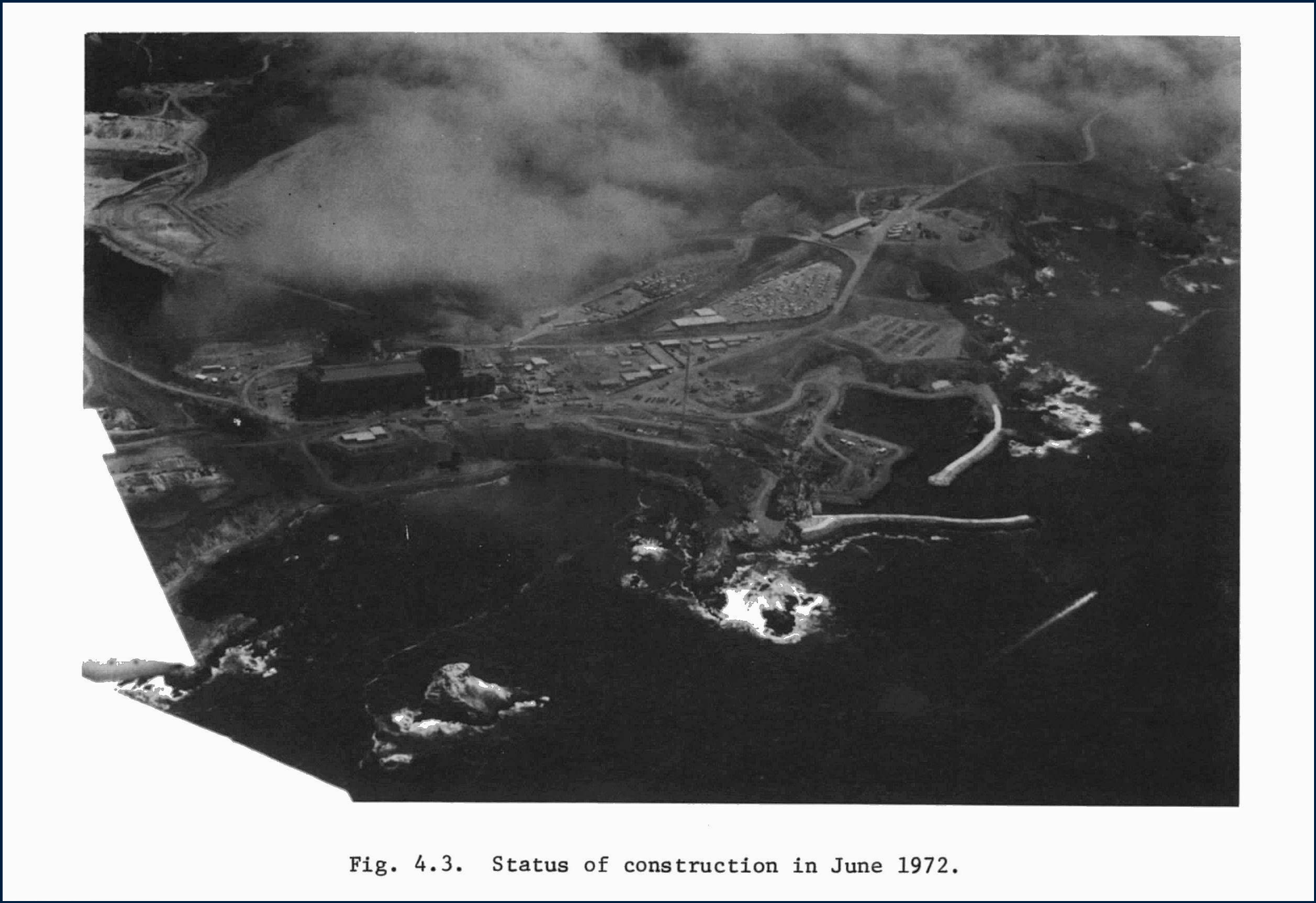
How DOE Used a 1973 AEC Environmental Statement to Authorize Diablo Canyon's Civil Nuclear Credit Award
Under the National Environmental Policy Act, federal agencies can adopt a prior environmental impact statement when a proposed action is "substantially the same" as what was previously analyzed. The authority—40 CFR § 1506.3—is a legitimate efficiency provision used routinely across the federal government.
The Department of Energy invoked it here. In a 22-page cover document designated DOE/EIS-0555 and finalized in July 2023, the department determined that awarding civil nuclear credits for Diablo Canyon's continued operation under PG&E's then-current NRC licenses was substantially the same as the proposed actions covered by five prior NEPA documents. It adopted those documents as appendices and issued the EIS.
Interactive diagram: the five environmental review documents—spanning 1973 to 2007—that the DOE adopted as appendices when issuing its 22-page EIS for Diablo Canyon's civil nuclear credit award in 2023.
- The 1973 AEC Final Environmental Statement—536 pages, prepared for the initial construction and operation of Diablo Canyon Units 1 and 2
- A 1976 NRC Addendum to the 1973 statement
- A 1993 NRC Environmental Assessment—a narrower finding of no significant impact for specific licensing matters
- A 2003 NRC Environmental Assessment for the Independent Spent Fuel Storage Installation (ISFSI)
- A 2007 NRC Supplement adding terrorism analysis to the 2003 ISFSI assessment
At one point citing "A review of recent documents and a Google Earth search" as its methodology, DOE's 22-page review addressed the standard NEPA categories—land use, air quality, geology, water resources, aquatic ecology. It concluded, topic by topic, that the existing findings "remain adequate."
Its explicit rationale: awarding credits for continued operation under current NRC licenses is substantially the same as what the prior documents analyzed.
The question is whether that characterization holds for a facility operating 50 years after the original analysis was prepared.
What's Changed at Diablo Canyon Since 1973
The Plant Was Built for a License That Expired Decades Ago
The 1973 AEC document analyzed a nuclear power plant whose original operating licenses were set to expire in the 1990s. The document examined construction impacts and initial operation—not extended operation through 2030 under a license renewed by the NRC in 2026 and limited by California law under Senate Bill 846. The DOE's framing—that the credit award is "substantially the same" as what the 1973 document analyzed—collapses a significant distinction: that document authorized a plant to open; this authorization keeps it running nearly six decades later.
The Spent Fuel Storage Installation Is Now Permanent
In 1973, spent nuclear fuel from Diablo Canyon was expected to eventually leave the site—a federal repository was anticipated. That repository was never built. Diablo Canyon now has an Independent Spent Fuel Storage Installation on site that will remain long after the reactors close in 2030. The 2003 and 2007 ISFSI assessments address it, but as narrowly scoped standalone analyses. No comprehensive environmental review has examined the ISFSI as a permanent feature of the site.
The Endangered Species Act Didn't Exist When the 1973 Review Was Written
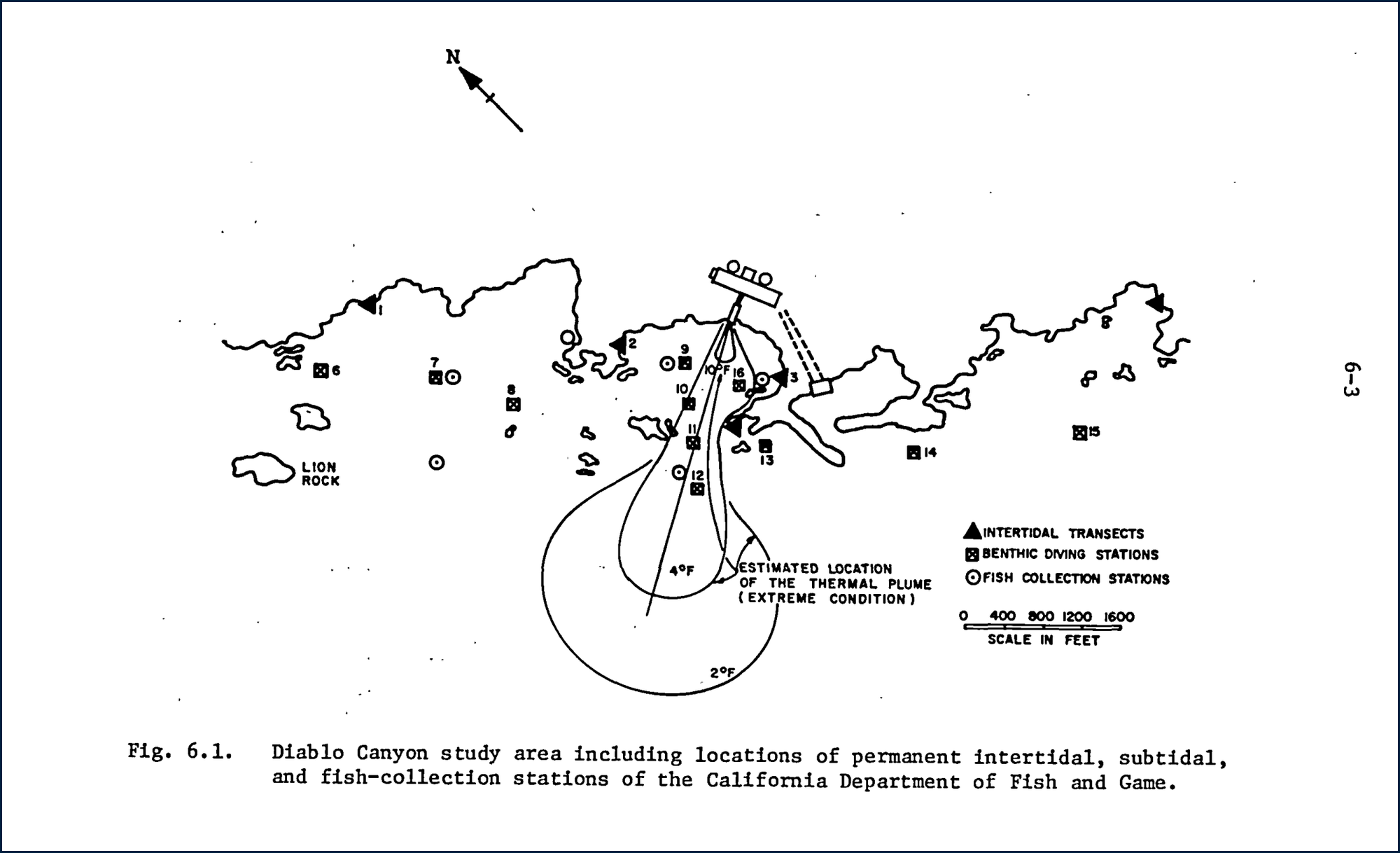
The Endangered Species Act was signed into law in December 1973—months after the AEC's environmental statement was finalized.
When the Nuclear Regulatory Commission conducted its own fresh environmental review of Diablo Canyon's license renewal in 2025, it made formal ESA findings that the plant's continued operation"...may affect and is likely to adversely affect" four federally listed species: the green sea turtle, the loggerhead sea turtle (North Pacific distinct population segment), the leatherback sea turtle, and the Pacific olive ridley sea turtle. These determinations triggered formal Section 7 consultation with the National Marine Fisheries Service.
The DOE's 22-page 2023 adoption contained no comparable analysis. The 1973 document predates the legal framework that made such findings possible.
California's Environmental Review of Diablo Canyon Under SB 846: A Statutory Exemption
On the state side, there is no environmental review.
Senate Bill 846, signed by Governor Newsom in September 2022, includes a provision that conclusively places Diablo Canyon outside the reach of California's primary environmental law. Section 25548.2(b) of the Public Resources Code, as added by SB 846, states that "...the Diablo Canyon powerplant site, and all structures, buildings, and equipment at the site or necessary to extend operations at the site, shall conclusively be deemed an existing facility or existing facilities"—invoking CEQA's Class 1 categorical exemption for existing facilities (14 Cal. Code Regs. § 15301)—and "not subject to any exception" that could otherwise override the exemption. The provision applies "in any agency or judicial proceeding."
In passing the language, the Legislature explicitly cited World Business Academy v. State Lands Commission (2018) 24 Cal.App.5th 476—a case in which a California appellate court upheld a categorical exemption for Diablo Canyon operations—and effectively codified that precedent into statute. A separate provision of SB 846 also declares that the state's $1.4 billion loan agreement with PG&E is "not a project for purposes of the California Environmental Quality Act" at all.
The significance of the "not subject to any exception" language is substantive. CEQA normally preserves several override conditions—including significant cumulative environmental impacts and unusual circumstances—that environmental challengers can invoke to defeat a categorical exemption. SB 846 bars those conditions from applying in any forum, administrative or judicial.
The result: California's primary environmental review law did not apply to the Diablo Canyon extension. No state environmental analysis was conducted.
The NRC's 542-Page Environmental Impact Statement—Published Nearly Two Years After the DOE Award
The Nuclear Regulatory Commission did eventually produce the kind of comprehensive environmental analysis that the DOE's adoption bypassed. NUREG-1437, Supplement 62—"Generic Environmental Impact Statement for License Renewal of Nuclear Plants Regarding License Renewal of Diablo Canyon Nuclear Power Plant, Units 1 and 2"—was published in June 2025. It is 542 pages.
The NRC's process included public scoping meetings in February 2024 (one virtual, one in-person in San Luis Obispo), three rounds of site audits in March and June 2024, consultation with federal, state, tribal, and local agencies, and a public comment period on a draft SEIS that closed in December 2024. The final SEIS addressed aquatic ecology, climate change impacts, greenhouse gas emissions, historic and cultural resources, and the Chumash Heritage National Marine Sanctuary—which the NRC found may be affected by continued operations, though it determined the plant is "not likely to destroy, cause the loss of, or injure sanctuary resources."
On the marine thermal impacts that have been a subject of concern since the plant's earliest environmental assessments, the NRC's 2025 analysis—drawing on decades of post-operational monitoring data that didn't exist in 1973—rated the effect of thermal effluents on aquatic organisms as "small."
The NRC issued Diablo Canyon's renewed operating licenses on April 2, 2026, after PG&E provided required certifications under the Coastal Zone Management Act and the Clean Water Act. The renewed licenses authorize operation through 2044 and 2045. California law limits actual operation to October 31, 2030.
The chronology is worth holding in mind. DOE finalized its EIS in July 2023—before PG&E had even filed its NRC license renewal application, which wasn't submitted until November 2023. The NRC's comprehensive, site-specific environmental review wasn't published until June 2025, nearly two years after DOE adopted the 1973 documents to justify the credit award.
What Two Federal Environmental Reviews of the Same Plant Actually Show
Three distinct environmental review paths ran through the Diablo Canyon extension. The DOE adopted a 50-year-old analysis in 22 pages to support the civil nuclear credit award. The NRC produced a 542-page analysis—with formal endangered species findings and marine sanctuary analysis—published after the credit money was already committed and after PG&E had filed for license renewal. California foreclosed any review by statute.
None of this is a determination about whether Diablo Canyon should be operating. Whether the plant's continued operation is sound energy policy is a question that California legislators, ratepayers, and environmental advocates continue to actively debate, and that debate involves considerations well beyond environmental review. What these documents show is the environmental analysis architecture that underpinned the federal authorization—who reviewed what, when, and on what basis.
The full chain of documents, from the 1973 AEC statement through the NRC's 2025 SEIS, is publicly available. Some of it requires knowing where to look.
A Note on Our Diablo Canyon Source Library
 Mac Douglass | Editor
All primary source documents referenced in this article are linked in the Diablo Canyon Source Library—California Today's interactive archive of 643 public-record documents on Diablo Canyon spanning 1968 to 2026. The source library includes NRC inspection records, CPUC filings, CEC mandated reports, FEMA emergency exercise reports, federal en vironmental documents, and state water board records. Documents can be searched, filtered by category, and sorted by date.
Sources & References (Annotated)
PRIMARY FEDERAL DOCUMENTS:
DOE/EIS-0555—Final Environmental Impact Statement, Civil Nuclear Credit Program, Diablo Canyon Power Plant (July 2023) The Department of Energy's Environmental Impact Statement supporting the civil nuclear credit award to PG&E. A 22-page cover document that adopts five prior NRC and AEC NEPA documents as appendices. This is the central document analyzed in this article. Available at the DOE Civil Nuclear Credit Program page. The EIS lists the ADAMS accession numbers for each adopted document.
1973 AEC Final Environmental Statement—Diablo Canyon Units 1 & 2 (May 1973) The original environmental analysis prepared by the Atomic Energy Commission (the predecessor to the NRC) for the construction and operation of Diablo Canyon. 536 pages. Foundational document adopted—along with four subsequent analyses—by DOE in 2023. Available in the NRC's ADAMS public document system under accession number ML15043A481. Note: the document is a scanned image; text extraction requires OCR tools.
1976 NRC Addendum to the Final Environmental Statement A supplement to the 1973 AEC statement, issued by the Nuclear Regulatory Commission after it replaced the AEC. Addresses updates and modifications to the original analysis, including revised thermal-plume projections and acknowledgment of benthic impacts in Inlet Cove. Adopted as part of DOE/EIS-0555. Available via DOE document archive.
1993 NRC Environmental Assessment and Finding of No Significant Impact A narrower environmental assessment addressing specific licensing matters for Diablo Canyon Units 1 and 2. One of the five documents adopted in DOE/EIS-0555. Available in NRC ADAMS, accession ML022340575.
2003 NRC Environmental Assessment—Diablo Canyon Independent Spent Fuel Storage Installation The environmental assessment prepared for the construction and operation of the ISFSI—the onsite dry cask storage facility for spent nuclear fuel. Adopted in DOE/EIS-0555. Available in NRC ADAMS, accession ML032970370.
2007 NRC Supplement to the ISFSI Environmental Assessment A supplement to the 2003 ISFSI assessment, adding terrorism analysis following a legal challenge by San Luis Obispo Mothers for Peace. Adopted in DOE/EIS-0555. Available in NRC ADAMS, accession ML072400511.
NUREG-1437, Supplement 62—Final Supplemental Environmental Impact Statement for Diablo Canyon License Renewal (June 2025) The Nuclear Regulatory Commission's comprehensive plant-specific SEIS prepared in connection with PG&E's 2023 application to renew Diablo Canyon's operating licenses for an additional 20 years. 542 pages. Includes site audits, public scoping meetings, tribal and agency consultation, public comment review, Endangered Species Act findings for four sea turtle species, and analysis of the Chumash Heritage National Marine Sanctuary. The NRC staff's conclusion: "the adverse environmental impacts of license renewal for Diablo Canyon are not so great that preserving the option of license renewal for energy-planning decision-makers would be unreasonable." Direct PDF link (ADAMS accession ML25156A357). Also available on the NRC's Diablo Canyon license renewal application page.
NRC Federal Register Notice—Diablo Canyon License Renewal and Record of Decision (April 6, 2026) The Federal Register notice announcing issuance of Renewed Facility Operating License Nos. DPR-80 and DPR-82 to PG&E for Diablo Canyon Units 1 and 2, and summarizing the Record of Decision. Published 91 FR 17310. Full notice via Federal Register.
CALIFORNIA STATE LAW:
Senate Bill 846 (Dodd, Chapter 239, Statutes of 2022)—Diablo Canyon Extension Authorization California legislation authorizing the limited extension of Diablo Canyon's operation. Key provisions relevant to this article: (1) Section 25548.2(b) of the Public Resources Code, which conclusively deems the Diablo Canyon site an "existing facility" under CEQA's Class 1 categorical exemption (14 Cal. Code Regs. § 15301) and bars any exception to that exemption "in any agency or judicial proceeding"; (2) Section 25548.5(c), which separately declares the state's loan agreement with PG&E is "not a project for purposes of the California Environmental Quality Act"; (3) the $1.4 billion state loan authorization through the Department of Water Resources; (4) the operational limit of October 31, 2030, regardless of the NRC license term. The Legislature cited World Business Academy v. State Lands Commission (2018) 24 Cal.App.5th 476 as precedent for the CEQA categorical exemption approach. Full bill text via California Legislative Information.
REGULATORY FRAMEWORK:
40 CFR § 1506.3—NEPA Adoption Provision The federal regulation under which one agency may adopt another agency's environmental impact statement when the proposed actions are "substantially the same." This is the authority DOE invoked in issuing DOE/EIS-0555. Available via the Electronic Code of Federal Regulations.
14 Cal. Code Regs. § 15301—CEQA Class 1 Categorical Exemption (Existing Facilities) The CEQA regulatory provision that SB 846 invoked. The Class 1 exemption covers minor alterations of existing public or private structures. SB 846 directed that Diablo Canyon's site "shall conclusively be deemed" to fall within this exemption and barred the exceptions in 14 Cal. Code Regs. § 15300.2 from applying. CEQA Guidelines available via California OPR.
10 CFR Part 51—NRC Environmental Protection Regulations The NRC's regulations implementing NEPA for nuclear licensing actions, including the requirement to prepare a supplement to the Generic Environmental Impact Statement for License Renewal in connection with renewal of a power reactor operating license. Available via the Electronic Code of Federal Regulations.
CONTEXT AND BACKGROUND:
Governor Newsom Press Release—NRC Approval of Diablo Canyon License Renewals (April 2, 2026) Newsom's office statement welcoming the NRC's license renewal decision. Includes a summary of the extension's history, key financial figures, and context on SB 846. Available at the Governor's website.
NRC Press Release No. 26-039—NRC Issues 100th Renewed License with Diablo Canyon Approvals (April 2, 2026) The NRC's press release announcing the license renewal, noting that the Diablo Canyon renewals marked the 99th and 100th renewed commercial reactor operating licenses in NRC history. Unit 1 license now expires November 2, 2044; Unit 2 expires August 26, 2045. Available on the NRC website.
CEC/CPUC Joint Agency Reliability Planning Assessment—SB 846 Second Quarterly Report 2026 (May 2026) The California Energy Commission and California Public Utilities Commission's second quarterly reliability report for 2026, required by SB 846. Provides updated supply and demand analysis for summer 2026 in the California ISO balancing area. Shows positive supply margins under planning standard conditions. Available via the California Energy Commission. Publication number CEC-200-2026-005.
This article is the first in a series on Diablo Canyon's regulatory and environmental record. Follow-up coverage will examine the marine impact record, tribal consultation history, the plant's cost structure under SB 846, and emergency preparedness reporting.

