

Most of California's endangered birds are declining, according to the state's first status report since 2005
California's Department of Fish and Wildlife rates 15 of the state's 27 protected birds as decreasing and seven more as possibly decreasing. Here is the trend for every bird, the threats CDFW lists, the 2026 candidates and the Swainson's hawk petition.


California's Department of Fish and Wildlife has rated the population trend of every bird on the state's endangered species list, and most of them are declining. In its first full status report on the state's endangered, threatened and candidate species since 2005, CDFW rates 15 of the 27 protected birds as decreasing. It labels five more "Unknown/Decreasing" and two "Stable/Decreasing."
Only four are rated stable or better: the California condor, the bald eagle, the greater sandhill crane and the Swainson's hawk. No bird on the list is rated simply as increasing. One of those four, the Swainson's hawk, is now the subject of a petition from California's homebuilders to take it off the threatened list.
The report went before the Fish and Game Commission at its October 13–16 meeting. Its figures are a snapshot as of October 1, 2025, and three more birds have become candidates for protection since then. This article sets out CDFW's rating for each bird, the threats the department lists, where the Swainson's hawk petition stands and the decisions coming next. For the full picture of protected wildlife beyond birds, see our guide to every animal that's endangered or threatened in California.
Find any bird in the full table
CDFW's 2026 status report rates 15 of California's 27 endangered and threatened birds as decreasing:
State law requires CDFW to report to the Fish and Game Commission on the status of every species listed under the California Endangered Species Act (CESA). The last such report came out in 2005. In the memo sending the new one, CDFW notes that the 2005 edition ran to more than 500 pages. The 2026 version is far shorter, and the department built it to be revised every three years.
The report covers 260 species listed as endangered or threatened under CESA, 64 plants listed as rare under the separate Native Plant Protection Act and 14 candidates for listing. Since 2005, 29 species have been added to the endangered and threatened lists, six have been removed and four have moved up from threatened to endangered. Its appendix gives every species a listing status, a population trend, the regions where it occurs and a set of coded threats.
Birds make up 27 of those entries: 16 endangered, nine threatened and two candidates. Our count of CDFW's trend labels for those 27 birds:
- Decreasing: 15
- Unknown/Decreasing: 5
- Stable/Decreasing: 2
- Stable: 2 (California condor, Swainson's hawk)
- Stable/Increasing: 2 (bald eagle, greater sandhill crane)
- Unknown: 1 (western burrowing owl)
Taken together, 22 of the 27 birds sit in a category that is decreasing or possibly decreasing. The single "Unknown" is the burrowing owl, which is still a candidate.
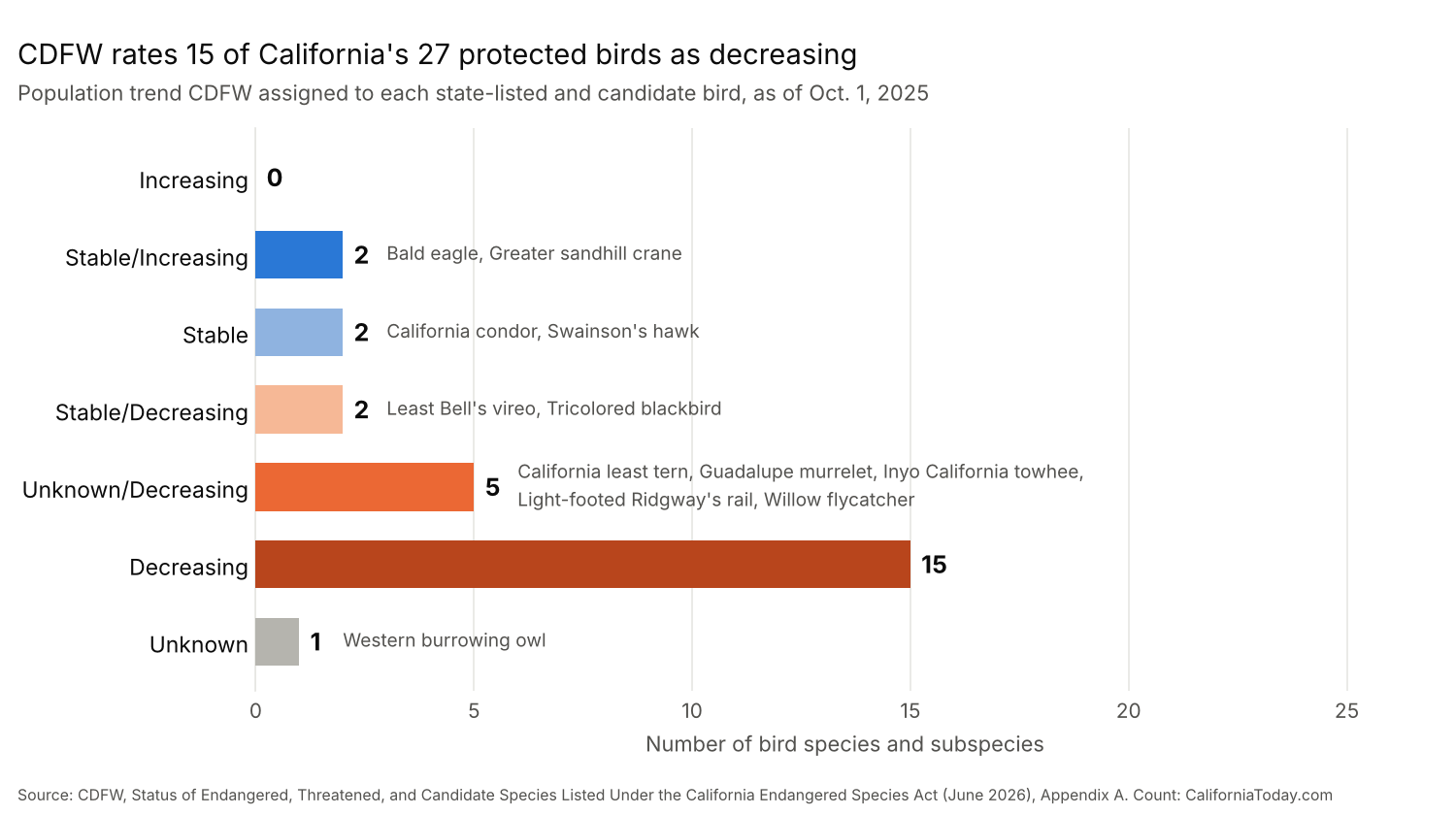
Our count uses CDFW's own trend label for each of the 27 birds:
Every number above comes from the department's appendix, read row by row. CDFW says each trend is based on population data, with information drawn from the California Natural Diversity Database, status reviews, five-year species reviews, Species of Special Concern assessments, ongoing research and staff expertise. A species gets "unknown" where the department lacks enough information to assess a trend.
The department also warns that the quality and timing of the data vary widely from species to species. In the appendix's own words, "For some species, a more detailed analysis may result in a trend that differs from what was assigned." The report does not define the split labels such as "Stable/Decreasing". We report them exactly as CDFW printed them. The phrase "decreasing or possibly decreasing" is our shorthand for the three categories that include the word "Decreasing."
The figures describe the list as it stood on October 1, 2025. The table at the end of this article adds the three birds that became candidates in 2026, which the report does not rate.
Five of California's decreasing birds occur only in its three desert ecoregions:
CDFW assigns each species to the ecoregions of the State Wildlife Action Plan. Grouping the 15 "Decreasing" birds by those regions shows where they are found.
- Desert only (Colorado, Mojave and Sonoran Desert ecoregions): gilded flicker, Gila woodpecker, elf owl, Yuma Ridgway's rail and Arizona Bell's vireo.
- Southern California Coast ecoregion only: Belding's savannah sparrow and Scripps's murrelet. Two of the "Unknown/Decreasing" birds, the light-footed Ridgway's rail and the Guadalupe murrelet, are also confined to that ecoregion.
- Klamath Mountains and neighboring ecoregions: marbled murrelet, northern spotted owl and great gray owl, all three of which CDFW places in the Klamath Mountains ecoregion.
- Elsewhere: California black rail, bank swallow and western yellow-billed cuckoo across many ecoregions; California Ridgway's rail in the Central California Coast, Northern California Coast and Great Valley ecoregions; and greater sage-grouse in the Modoc Plateau, Northwestern Basin and Range and Mono ecoregions.
Many of the declining birds have been on California's lists for decades. Ten of the 22 decreasing or possibly decreasing birds have held their current status since 1980 or earlier. That group includes the California Ridgway's rail and the light-footed Ridgway's rail, both endangered since 1971.
Only four of California's protected birds rate as stable or better:
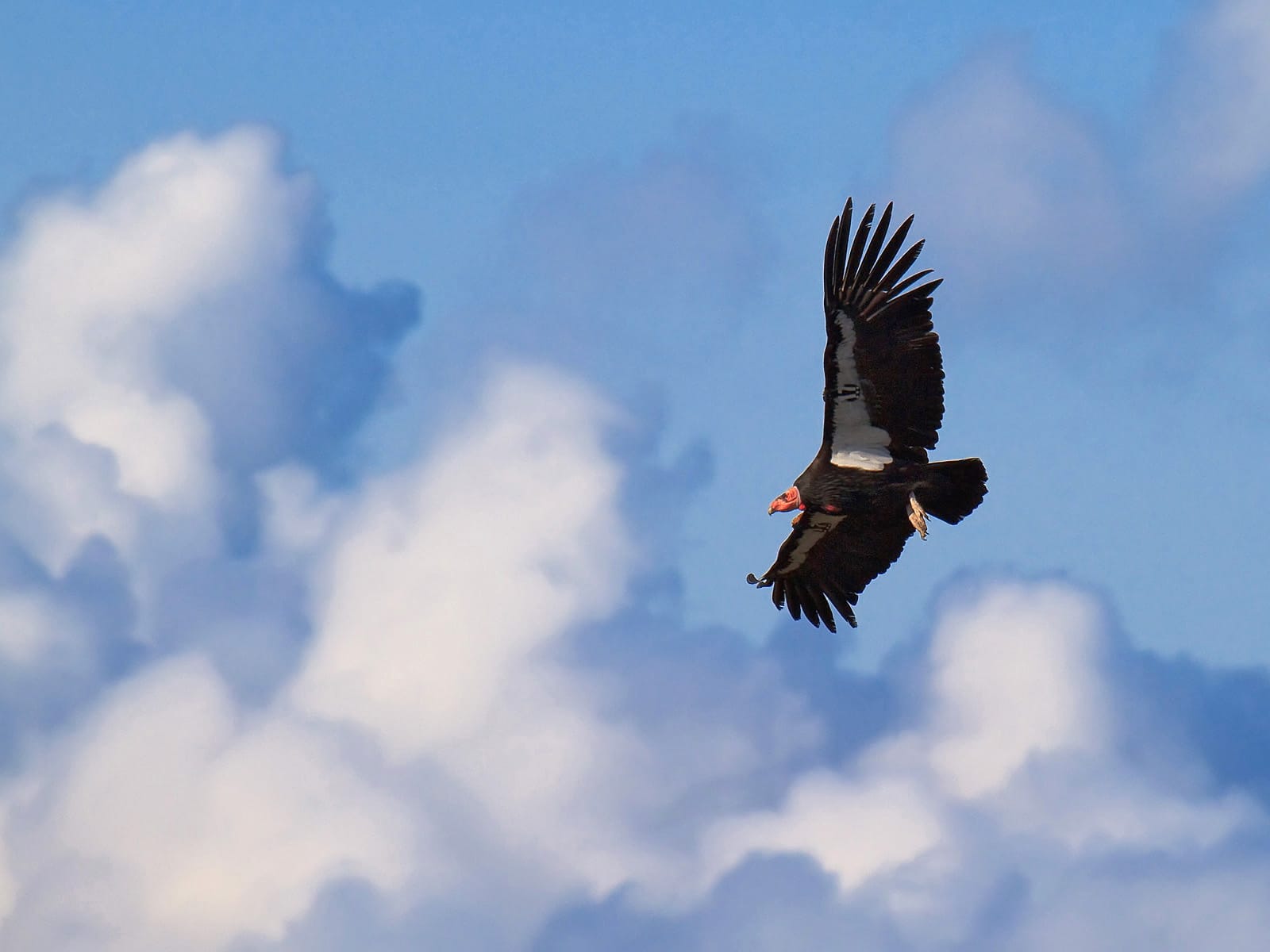
California condor (Stable). The condor has been state endangered since 1971 and federally endangered since 1967. The U.S. Fish and Wildlife Service counted 216 wild condors in California's two flocks at the end of 2025 (99 in Southern California and 117 in Central California), out of 607 condors worldwide. The condor is the only one of the four on CDFW's list of five-year reviews that are under way or may begin by 2031.
Bald eagle (Stable/Increasing). The bald eagle has been state endangered since 1971. The federal government removed it from the Endangered Species Act list as recovered on August 8, 2007, according to CDFW's list of listed animals. California has not followed. The eagle also remains on the state's separate fully protected list.
Greater sandhill crane (Stable/Increasing). The crane has been state threatened since April 17, 1983.
Swainson's hawk (Stable). The hawk was listed as threatened on the same day as the crane. It is now the only bird with a petition pending to remove it from the list (next section).
Recovery has taken birds off the list before. Since the 2005 report, two birds have come off the endangered list as recovered: the American peregrine falcon and the California brown pelican, both delisted in 2009. Two birds have been added in the same period, the northern spotted owl and the tricolored blackbird, both listed as threatened. Our guide to peregrine falcons in California covers that recovery.
Homebuilders have petitioned to remove the Swainson's hawk from California's threatened list:
In June 2026, Dan Dunmoyer, president and CEO of the California Building Industry Association (CBIA), filed a petition with the Fish and Game Commission to delist the Swainson's hawk. The petition argues that the hawk's California population "has rebounded to pre-historic levels." It says historic threats have been removed by legislation and that the threats named in CDFW's last review no longer apply. The petition also ties the request to the housing shortage. It lists the "regulatory burdens" of a listing, including biological review requirements and habitat mitigation obligations.
Most of the petition's population case rests on a 2022 study in Ornithological Applications. Five of its seven authors were CDFW scientists when it was published. The study estimated 18,810 breeding pairs in California in 2018, with a 95% confidence interval of 11,353 to 37,228 pairs. It found that the summer population grew by 13.9% a year between 2005 and 2018. The estimate draws on surveys at 1,038 locations in 2005, 2006, 2016 or 2018.
The same study says the hawk remains largely extirpated from Southern California, where it was historically common. It notes that the increase coincided with expanded orchard and vineyard planting, which is not considered suitable for nesting. The authors recommended caution in conservation planning for the species and more frequent surveys.
"The stability of the recovery remains unclear."
Furnas et al., Ornithological Applications, 2022
For scale, CDFW's Swainson's hawk page cites a historic population of as many as 17,136 pairs and a 1980 estimate of 375 (±50) breeding pairs. The department's 2016 five-year review recommended that the hawk keep its threatened status. The 2026 status report rates its trend as stable rather than increasing and lists 17 of the 24 threat categories for it, tied with the greater sage-grouse for the most of any protected bird.
Opponents have written to the Commission. A September 17 letter from the Golden Gate Bird Alliance, filed in the Commission's October meeting record, argues that the population figure rests almost entirely on one study surveyed in four years. It says alfalfa and pasture are being converted to orchards and vineyards, and it rejects the petition's housing argument: "This is a false choice."
CDFW's evaluation of the Swainson's hawk petition was due October 17:
The Commission received the petition on June 9 and sent it to CDFW on June 19, according to the Commission's staff summary for its August 12–13 meeting. The department has 90 days to evaluate a petition and may ask for 30 more. In a July 13 memo, CDFW asked for the extension, which would move its evaluation's due date from September 17 to October 17. The request went on the consent calendar for the August meeting.
As of November 14, the Commission's petition page lists only the notice and the petition itself, with no CDFW evaluation. The Swainson's hawk was not on the agenda for the October 13–16 meeting. It was also absent from the list of potential December items that Commission staff drafted on October 2.
Under the Commission's process, CDFW's evaluation is received at a Commission meeting and made public for at least 30 days. The Commission then decides at a later meeting whether the petitioned action "may be warranted." If it decides yes, CDFW prepares a status review, due within 12 months with a possible six-month extension, before the Commission makes a final decision. The Commission's next meetings are December 15–16, 2026 and February 10–11, 2027.
The Commission's petition page sets out the standard it applies. The question is tied to the species' status and "in no way relates to economic consequences that might result from listing."
Three more birds became candidates for California protection in 2026:
A candidate is a species the Commission has formally put under review for listing. Under Fish and Game Code section 2085, CESA's ban on taking, possessing or selling a listed species (section 2080) applies to a candidate once notice is given. Three birds joined the candidate list after the report's October 2025 snapshot.
- Bendire's thrasher and Le Conte's thrasher. The Center for Biological Diversity petitioned for both desert songbirds in September 2025. The Commission accepted the petition at its April 15–16, 2026 meeting, and the notice of candidacy is dated April 29. According to the Commission's notice of the petition, Bendire's thrasher lives in the Mojave and Sonoran Desert ecoregions of southeastern California. Le Conte's thrasher's range also reaches the southern San Joaquin Valley. CDFW's status reports on both are due within a year of the notice.
- Mount Pinos sooty grouse. The Center for Biological Diversity and Los Padres ForestWatch petitioned on March 25, 2026. CDFW's petition evaluation recommended accepting it, and the Commission did so at its October 13–16 meeting. The notice of candidacy is dated October 19.
The grouse subspecies' historical range runs from Kings Canyon in the southern Sierra Nevada to isolated peaks in Kern and Ventura counties, including the Mount Pinos area for which it is named. According to CDFW's summary of the petition, it has been extirpated from those southern peaks since the late 20th century, and its range has receded about 100 miles north. CDFW's evaluation notes that hunting of the subspecies is allowed in Fresno, Inyo and Tulare counties and not in Kern or Ventura. The 2026 general sooty and ruffed grouse season ran from September 12 to October 12, according to CDFW's upland game bird page, and closed a week before the candidacy notice. The U.S. Fish and Wildlife Service has also found that a federal listing may be warranted and is reviewing a separate petition.
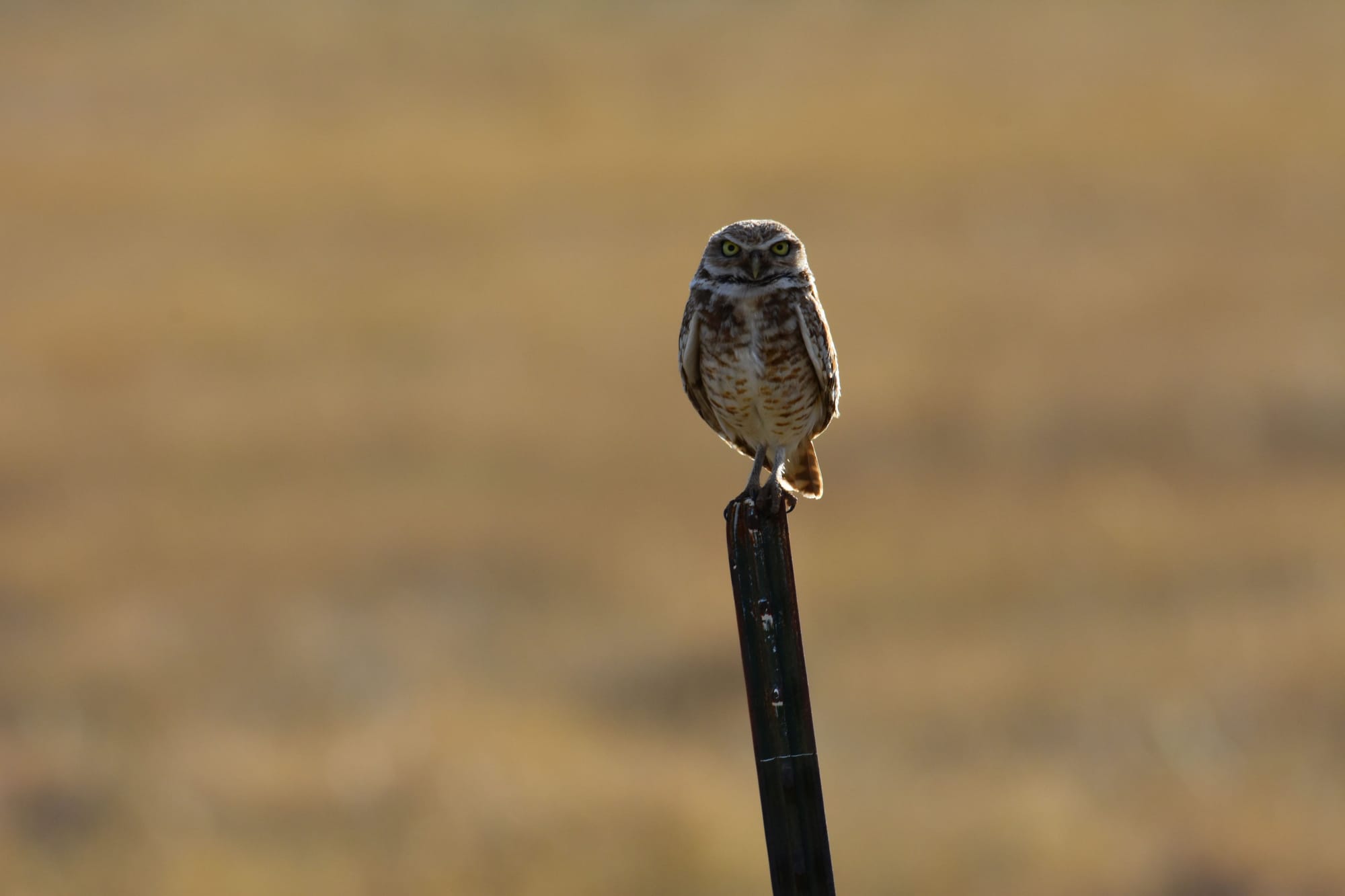
The western burrowing owl has been waiting the longest. The Commission accepted its listing petition in October 2024, and the candidacy notice gave CDFW a year to report. The Commission's petition page lists the department's status review as due October 25, 2025, and as of November 14 it shows no final decision. CDFW's 2026 report rates the owl's trend as unknown. Our burrowing owl guide covers where the owl lives in California and how to identify it.
 Brian Douglass | Specialist
Human disturbance is on CDFW's threat list for all 27 of California's protected birds:
The report defines 24 threats and stressors in three groups: climate change threats, local human ("anthropogenic") threats and ecological stressors. Counting the codes CDFW assigns to each bird gives the most common threats to the 27 protected birds:
- Human intrusions and disturbance: all 27
- Drought and reduced snowpack: 26
- Storms and flooding: 26
- Urban development: 24
- Renewable energy and invasive species: 21 each
- Grazing, pollution (including pesticides and water quality) and transportation infrastructure: 20 each
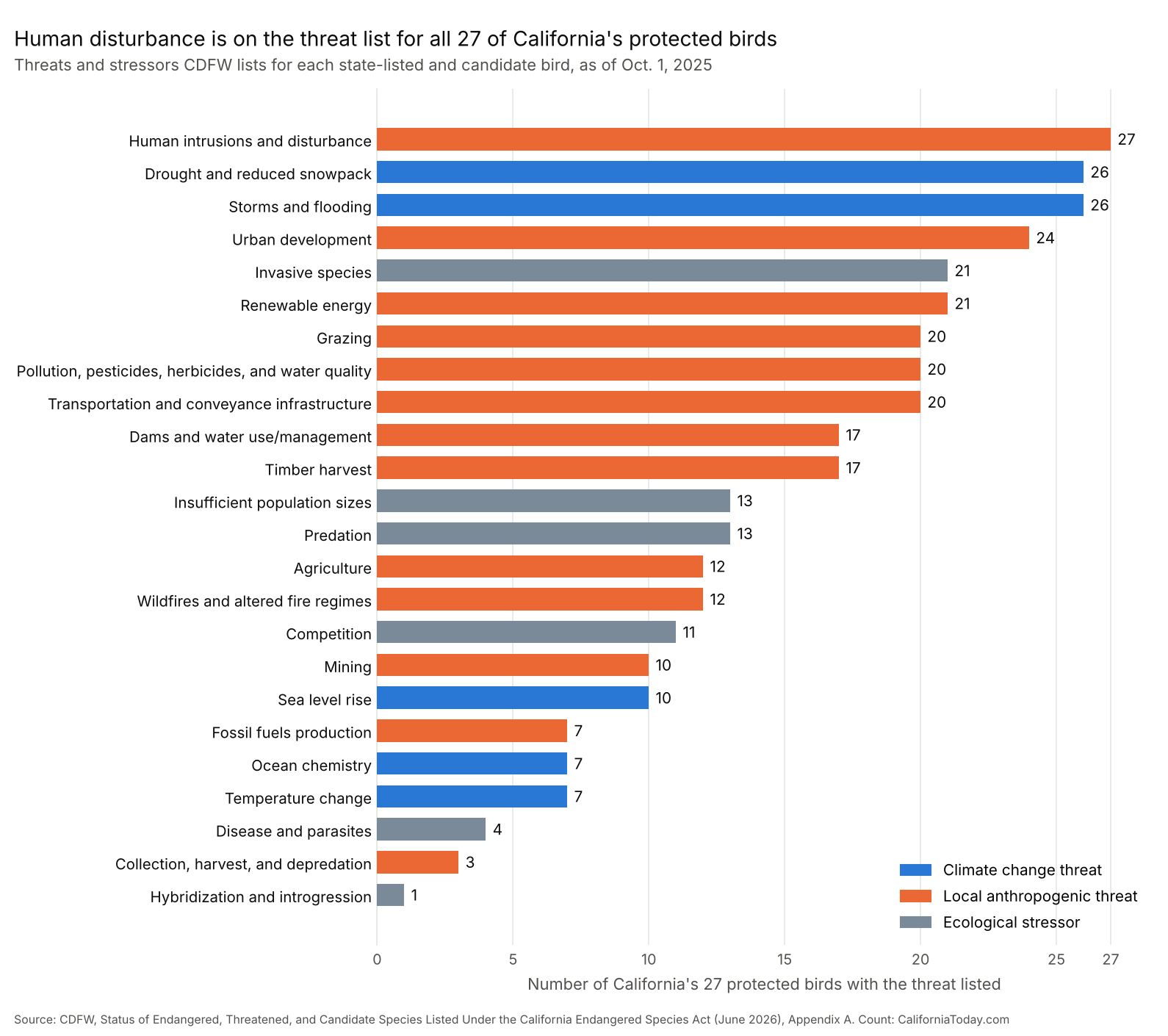
Renewable energy stands out for birds. CDFW lists it for 21 of the 27 protected birds. In the report's Table 5, which ranks threats across all 338 listed plants and animals, renewable energy is not among the seven that affect more than half of them. The report describes the effects of solar, wind and geothermal projects and their transmission lines as habitat loss and fragmentation, collisions, noise and visual disturbance, and artificial perching sites that can increase predation.
CDFW adds a caution about climate. Many of the threat assignments were compiled over several decades, and the department says the effects of climate change on most listed species have not yet been thoroughly assessed. It expects the climate threat to stay underestimated until that work is done.
Only 10 of California's 27 protected birds are also listed under the federal Endangered Species Act:
California's list and the federal list overlap only in part. Of the 27 birds in CDFW's report, 10 are also federally listed as endangered or threatened. They are the California condor, the three Ridgway's rails, the California least tern, least Bell's vireo, the marbled murrelet, the western yellow-billed cuckoo, the Inyo California towhee and the northern spotted owl. One subspecies of the willow flycatcher, the southwestern willow flycatcher, is also federally endangered.
For the remaining birds, including the Swainson's hawk, the elf owl, the Gila woodpecker, the bank swallow and the tricolored blackbird, CESA is the only endangered species law that applies. The greater sage-grouse's Bi-State population is listed by CDFW as proposed for federal threatened status. The bald eagle is the reverse case: state endangered and federally delisted.
 Jennifer Olney | Reporter
California's 30 protected and candidate birds, with their status and CDFW trend:
The table lists the 27 birds in CDFW's report and the three that became candidates in 2026. Status dates come from CDFW's October 2026 list of state and federally listed animals. The status date is when a bird took its current state status, so a bird first listed in 1971 and later moved to another category shows the later date. The Mount Pinos sooty grouse is not yet on that list, so its date comes from the Commission's October 19 notice.
| Bird | California status | In this status since | CDFW population trend (Oct. 1, 2025) | Federal Endangered Species Act status |
|---|---|---|---|---|
| Arizona Bell's vireo | Endangered | 1988 | Decreasing | Not listed |
| Bald eagle | Endangered | 1971 | Stable/Increasing | Delisted as recovered (2007) |
| Bank swallow | Threatened | 1989 | Decreasing | Not listed |
| Belding's savannah sparrow | Endangered | 1974 | Decreasing | Not listed |
| Bendire's thrasher | Candidate | 2026 | Not rated (candidate since April 29, 2026) | Not listed |
| California black rail | Threatened | 1971 | Decreasing | Not listed |
| California condor | Endangered | 1971 | Stable | Endangered |
| California least tern | Endangered | 1971 | Unknown/Decreasing | Endangered |
| California Ridgway's rail | Endangered | 1971 | Decreasing | Endangered |
| Elf owl | Endangered | 1980 | Decreasing | Not listed |
| Gila woodpecker | Endangered | 1988 | Decreasing | Not listed |
| Gilded flicker | Endangered | 1988 | Decreasing | Not listed |
| Great gray owl | Endangered | 1980 | Decreasing | Not listed |
| Greater sage-grouse | Candidate | 2023 | Decreasing | Proposed threatened (Bi-State population) |
| Greater sandhill crane | Threatened | 1983 | Stable/Increasing | Not listed |
| Guadalupe murrelet | Threatened | 2004 | Unknown/Decreasing | Not listed |
| Inyo California towhee | Endangered | 1980 | Unknown/Decreasing | Threatened |
| Le Conte's thrasher | Candidate | 2026 | Not rated (candidate since April 29, 2026) | Not listed |
| Least Bell's vireo | Endangered | 1980 | Stable/Decreasing | Endangered |
| Light-footed Ridgway's rail | Endangered | 1971 | Unknown/Decreasing | Endangered |
| Marbled murrelet | Endangered | 1992 | Decreasing | Threatened |
| Mount Pinos sooty grouse | Candidate | 2026 | Not rated (candidate since October 19, 2026) | Not listed; federal petition under review |
| Northern spotted owl | Threatened | 2019 | Decreasing | Threatened |
| Scripps's murrelet | Threatened | 2004 | Decreasing | Not listed |
| Swainson's hawk | Threatened | 1983 | Stable | Not listed |
| Tricolored blackbird | Threatened | 2019 | Stable/Decreasing | Not listed |
| Western burrowing owl | Candidate | 2024 | Unknown | Not listed |
| Western yellow-billed cuckoo | Endangered | 1988 | Decreasing | Threatened |
| Willow flycatcher | Endangered | 1991 | Unknown/Decreasing | Endangered (southwestern subspecies only) |
| Yuma Ridgway's rail | Threatened | 1978 | Decreasing | Endangered |
The next decisions on California's endangered birds come in December, February and 2027:
The Fish and Game Commission meets December 15–16 in Sacramento and again on February 10–11, 2027. Under the Commission's process, CDFW's evaluation of the Swainson's hawk petition is received at a meeting and opened to at least 30 days of public comment, and the decision on whether delisting "may be warranted" comes at a later meeting.
CDFW's status review of the western burrowing owl was due October 25, 2025, and the Commission has not posted a final decision. CDFW's status reports on Bendire's and Le Conte's thrashers are due about a year after their April 29, 2026 candidacy notice. The report on the Mount Pinos sooty grouse is due about a year after October 19, 2026.
CDFW designed its 2026 report to be revised every three years. The next edition will show whether the trend for any of California's 15 decreasing endangered birds has changed.
What to read next
- Birds of California: A complete guide to the state's 696 bird species
- Every animal that's endangered or threatened in California in 2026
- Birds of prey in California: A guide to the state's hawks, eagles, falcons, vultures and owls
Sources and References
- California Department of Fish and Wildlife. Status of Endangered, Threatened, and Candidate Species Listed Under the California Endangered Species Act: Report to the California Fish and Game Commission. June 2026 (data as of October 1, 2025). https://nrm.dfg.ca.gov/FileHandler.ashx?DocumentID=243935
- California Fish and Game Commission. Staff summary, Item 8, October 13–16, 2026 meeting, with CDFW transmittal memo (June 5, 2026) and presentation. https://nrm.dfg.ca.gov/FileHandler.ashx?DocumentID=247507&inline
- California Fish and Game Commission. Meeting agenda, October 13–16, 2026. https://nrm.dfg.ca.gov/FileHandler.ashx?DocumentID=247178&inline
- California Department of Fish and Wildlife, California Natural Diversity Database. State and Federally Listed Endangered and Threatened Animals of California, October 2026. https://nrm.dfg.ca.gov/FileHandler.ashx?DocumentID=109405&inline
- U.S. Fish and Wildlife Service, California Condor Recovery Program. 2025 Annual Population Status (as of December 31, 2025). https://www.fws.gov/sites/default/files/documents/2026-02/2025-california-condor-population-status_508-compliant.pdf
- California Building Industry Association (Dan Dunmoyer). Petition to De-list the Swainson's Hawk Under the California Endangered Species Act, June 10, 2026. https://nrm.dfg.ca.gov/FileHandler.ashx?DocumentID=245615&inline
- Furnas, B. J., et al. "Rapid growth of the Swainson's Hawk population in California since 2005." Ornithological Applications 124(2), published February 11, 2022. https://academic.oup.com/condor/article/124/2/duac006/6527240
- California Department of Fish and Wildlife. Swainson's Hawks in California (species page). https://wildlife.ca.gov/Conservation/Birds/Swainsons-Hawk
- California Department of Fish and Wildlife. Status Review: Swainson's Hawk (Buteo swainsoni) in California, Five-Year Status Report, April 11, 2016. https://nrm.dfg.ca.gov/FileHandler.ashx?DocumentID=133622&inline
- California Fish and Game Commission. Public comments for Item 2, October 13–16, 2026 meeting (includes the Golden Gate Bird Alliance letter of September 17, 2026). https://nrm.dfg.ca.gov/FileHandler.ashx?DocumentID=247569&inline
- California Fish and Game Commission. Staff summary, Item 11 (Swainson's hawk extension request), August 12–13, 2026 meeting, with CDFW memo of July 13, 2026. https://nrm.dfg.ca.gov/FileHandler.ashx?DocumentID=247058&inline
- California Fish and Game Commission. Petitions to List Species Under the California Endangered Species Act. https://fgc.ca.gov/CESA
- California Fish and Game Commission. Staff summary, Item 25C (potential agenda items for the December 15–16, 2026 meeting, dated October 2, 2026). https://nrm.dfg.ca.gov/FileHandler.ashx?DocumentID=247591&inline
- California Fish and Game Commission. 2026 Meetings. https://fgc.ca.gov/Meetings/2026
- California Fish and Game Commission. Notice of Receipt of Petition: Swainson's hawk, July 14, 2026. https://nrm.dfg.ca.gov/FileHandler.ashx?DocumentID=245616&inline
- California Fish and Game Code § 2085. https://leginfo.legislature.ca.gov/faces/codes_displaySection.xhtml?lawCode=FGC§ionNum=2085
- California Fish and Game Code § 2080. https://leginfo.legislature.ca.gov/faces/codes_displaySection.xhtml?lawCode=FGC§ionNum=2080
- California Fish and Game Commission. Notice of Findings: Bendire's thrasher and LeConte's thrasher declared candidate species, April 29, 2026. https://nrm.dfg.ca.gov/FileHandler.ashx?DocumentID=245100&inline
- California Fish and Game Commission. Notice of Receipt of Petition: Bendire's thrasher and LeConte's thrasher, September 23, 2025. https://nrm.dfg.ca.gov/FileHandler.ashx?DocumentID=235753&inline
- California Department of Fish and Wildlife. Petition Evaluation for Mount Pinos Sooty Grouse (Dendragapus fuliginosus howardi), August 2026. https://nrm.dfg.ca.gov/FileHandler.ashx?DocumentID=246885&inline
- California Fish and Game Commission. Notice of Findings of Candidacy: Mount Pinos Sooty Grouse, October 19, 2026. https://nrm.dfg.ca.gov/FileHandler.ashx?DocumentID=247777&inline
- California Department of Fish and Wildlife. Upland Game Birds (2026–2027 seasons and limits). https://wildlife.ca.gov/Hunting/Upland-Game-Birds
- California Fish and Game Commission. Notice of Findings: Western Burrowing Owl, October 15, 2024. https://nrm.dfg.ca.gov/FileHandler.ashx?DocumentID=227089&inline


