

Australia's Great Ocean Road: 12 Apostles, Gibson Steps, and the gorges of Port Campbell, ranked
The final 15 kilometres of Victoria's Great Ocean Road hold the 12 Apostles, Gibson Steps Beach, and the lookouts of Port Campbell National Park. We drove the full stretch and ranked the three stops worth planning around—starting with a beach most visitors pass without stopping.


The shipwreck coast: Fifteen kilometres of stacks, arches, and gorges
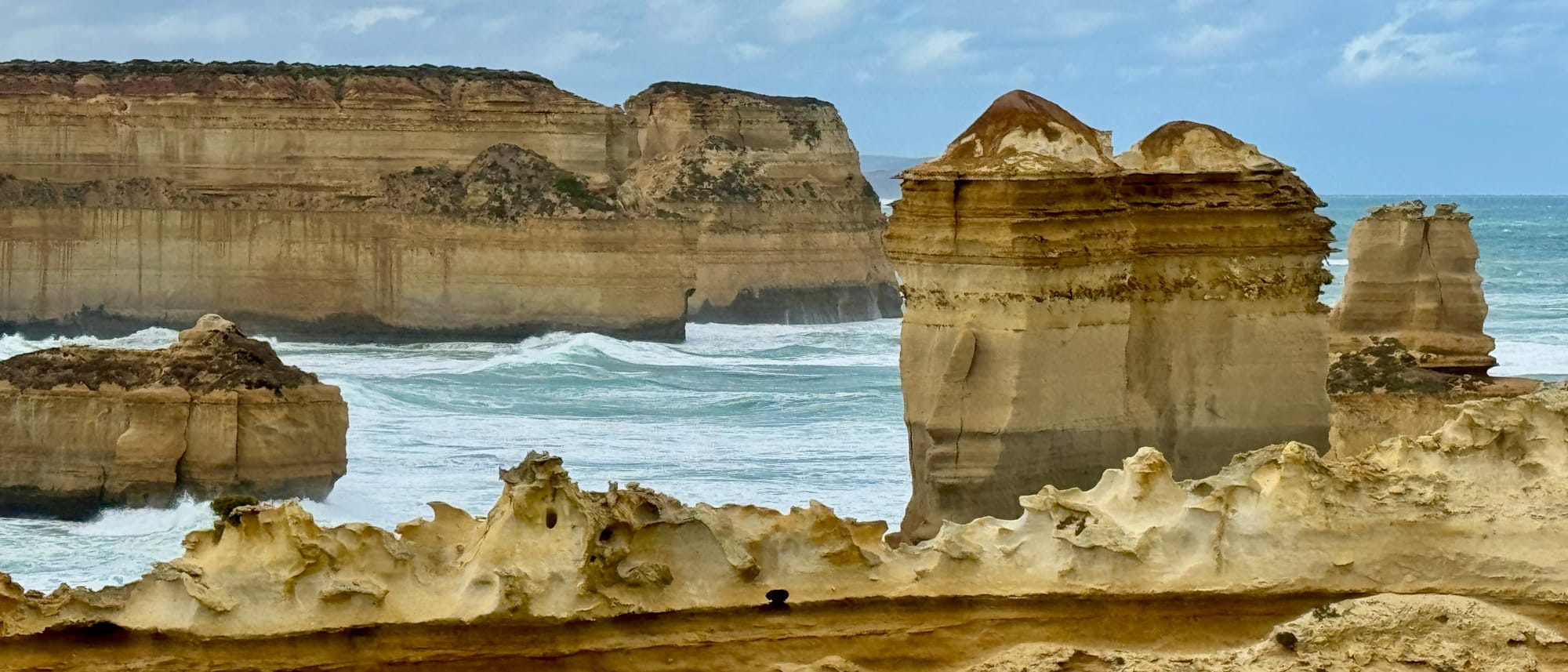
Nearly all of the Great Ocean Road's famous formations sit on its final 15 kilometres. The road runs about 240 kilometres along Victoria's coast, three to four hours west of Melbourne. This guide covers the section between Gibson Steps and The Grotto, where the shoreline becomes 70-metre limestone cliffs with sea stacks, arches, and gorges standing directly off the coast—the stretch known as the Shipwreck Coast.
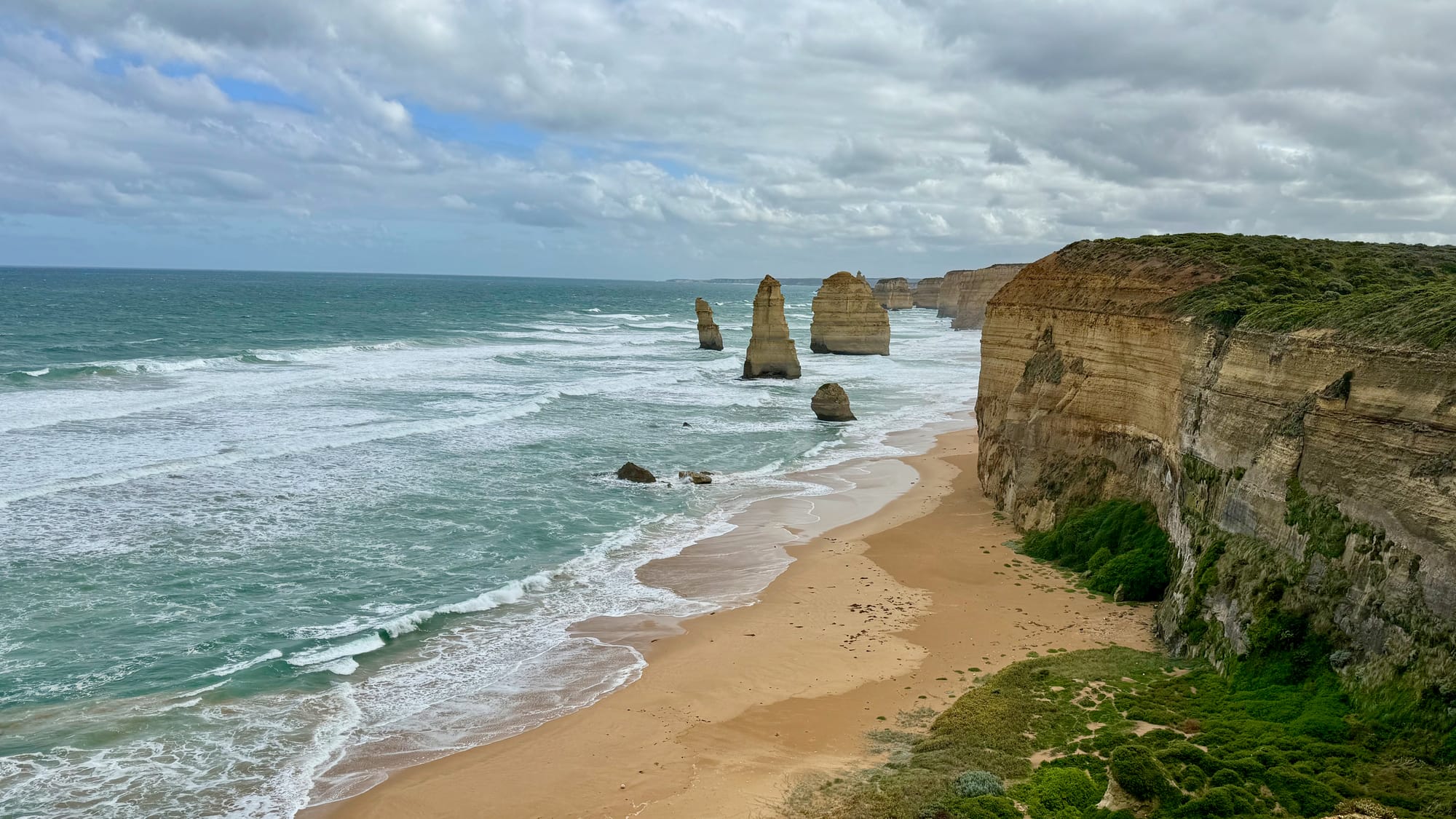
The 12 Apostles is the most visited stop on the road, at roughly two million visitors a year. Eight of the limestone stacks still stand—there were never twelve. It is worth seeing, but the stops on either side show the same geology at closer range with far fewer people. That is what this ranking covers: not whether to see the Apostles, but how to plan the stops around them.
This series covers destinations that make sense for California travelers, and the comparison here is direct: the Great Ocean Road is Victoria's Highway 1—coastal cliffs, ocean lookouts, and one two-lane road linking them. Base yourself in Port Campbell, the only town on this section; every stop in this guide is within a 15-minute drive.
Gibson Steps Beach at sand level—Gog and Magog in the surf
Gibson Steps Beach: 86 stairs down to the sand beside Gog and Magog
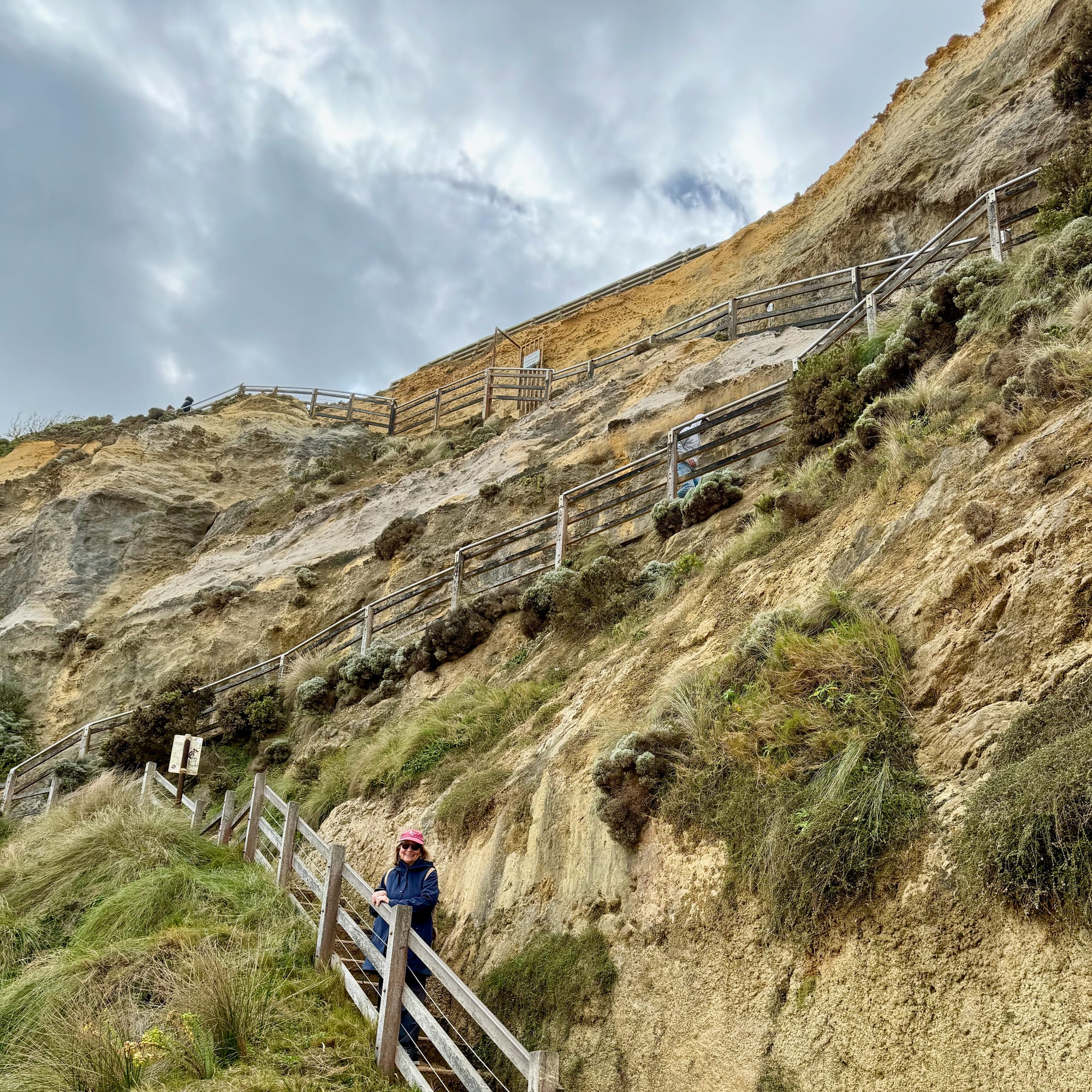
Gibson Steps is 1.1 kilometres east of the 12 Apostles visitor centre and has its own car park. A staircase cut into the cliff face—86 steps—leads down to the beach, where two sea stacks named Gog and Magog stand in the surf just offshore. It is the only point on this stretch where you can stand on the sand at the base of the formations rather than viewing them from 70 metres above.
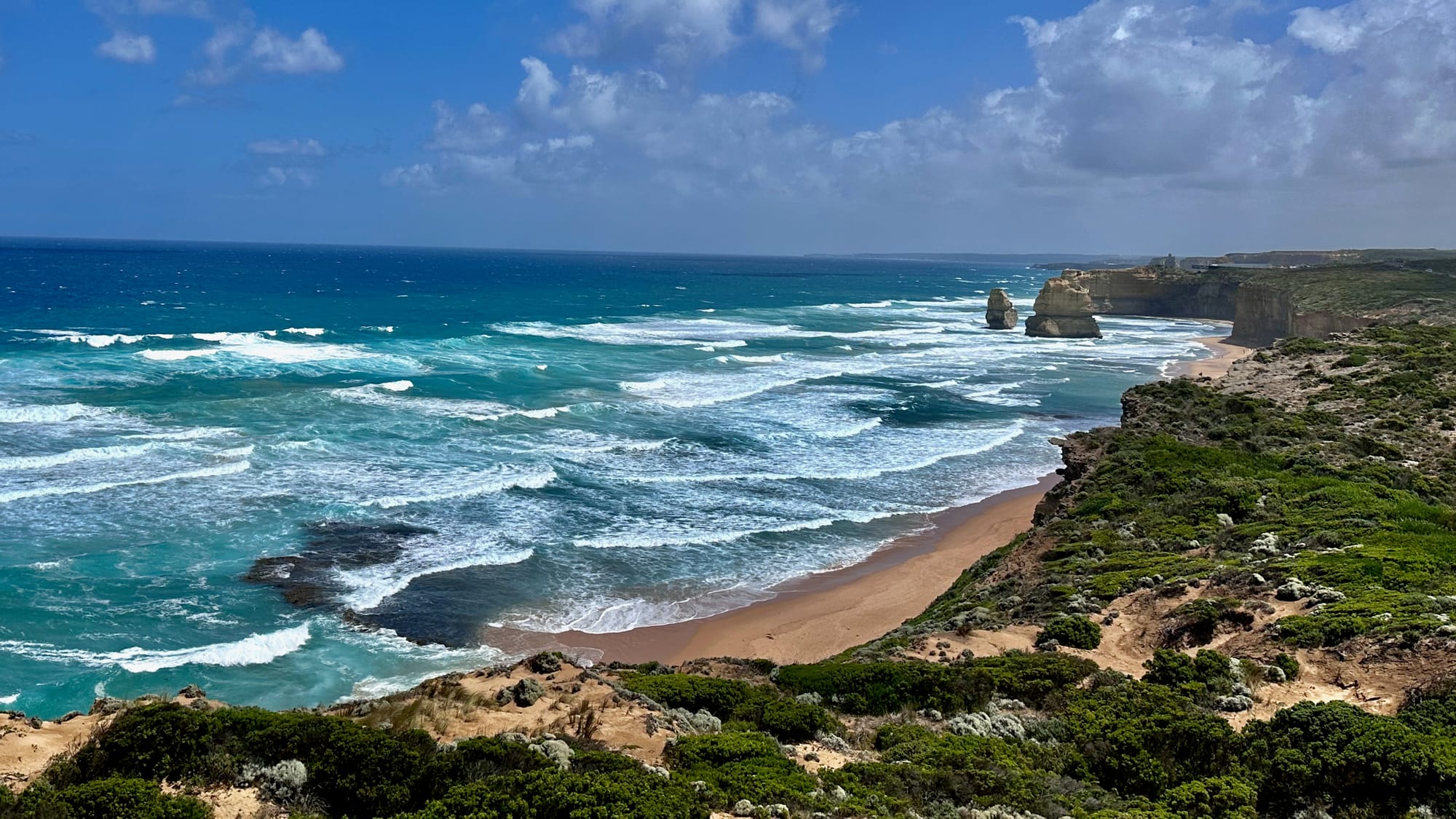
We ranked it first for the access: the same limestone as the Apostles, seen from beach level, usually shared with only a handful of people. Two practical notes—wear shoes that can get wet, and check conditions before you descend. The beach narrows and closes at high tide and in heavy swell.
Port Campbell National Park: Loch Ard Gorge, The Razorback, and The Grotto
West of the Apostles the road passes through Port Campbell National Park, where five named lookouts come in quick succession: Loch Ard Gorge, The Razorback, Island Arch, Tom and Eva, and The Grotto. Each has its own car park and a short, flat track to the viewing point. Entry is free at all of them, and each puts you within metres of the formations.
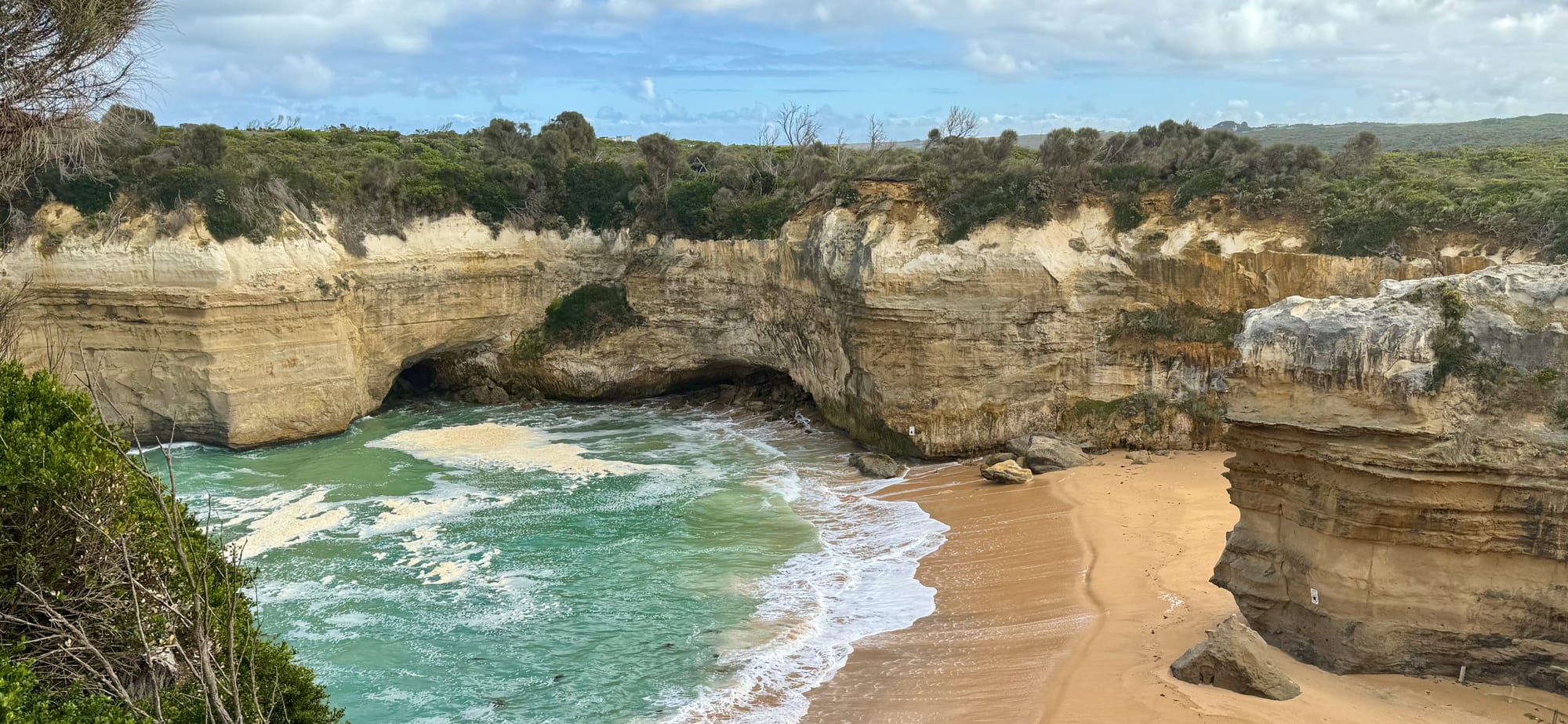
The names record the area's history: the clipper Loch Ard sank here in 1878, and its two survivors—teenagers Tom Pearce and Eva Carmichael—came ashore in the gorge that now carries the ship's name. The two stacks at its mouth are named for them. The Grotto, a 20-minute drive further west, is part sinkhole and part sea arch, with a staircase that descends into it.
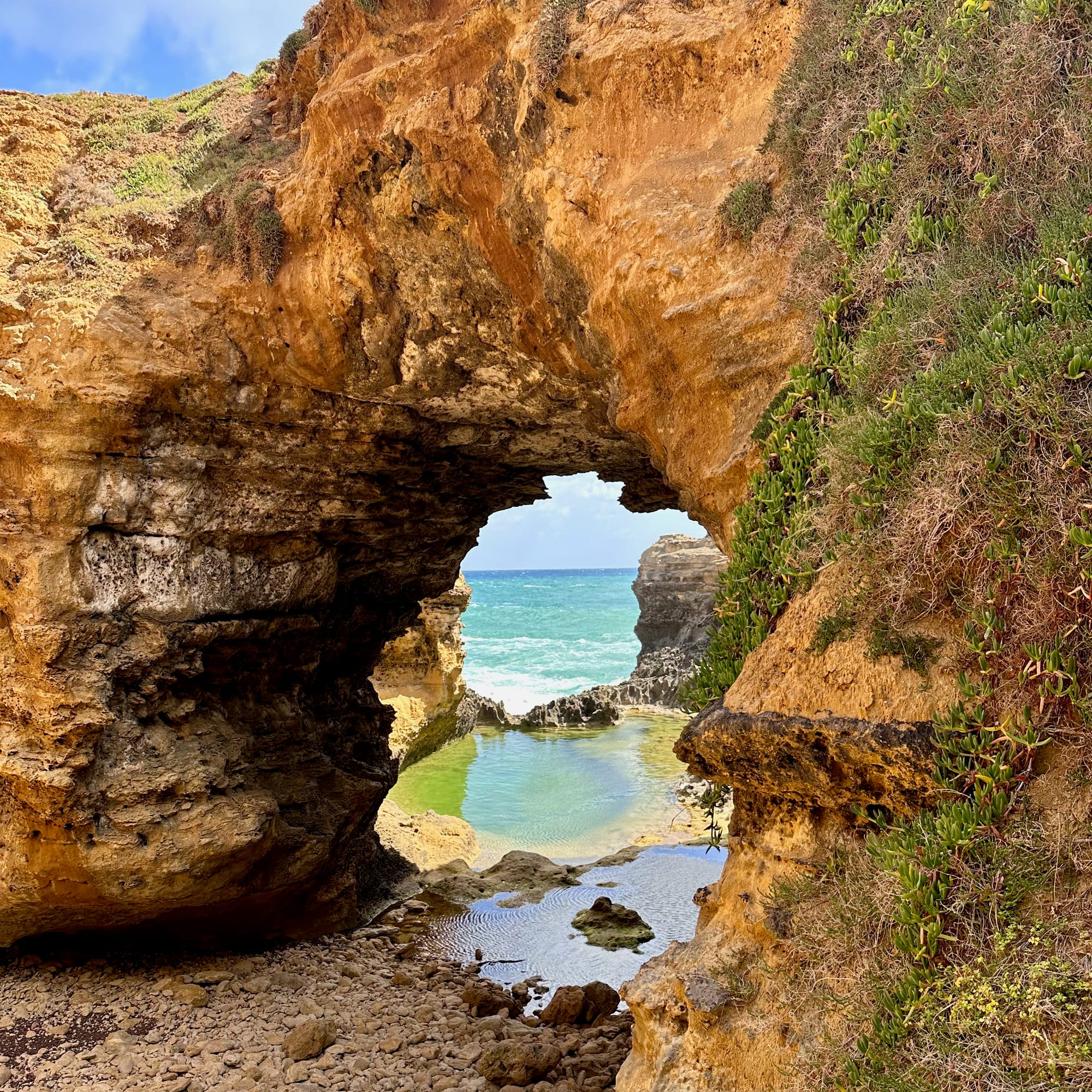
Every stop on this list sits on roughly 15 kilometres of the Great Ocean Road between Gibson Steps and The Grotto, with the 12 Apostles in the middle. Base in Port Campbell—the one town on the stretch—and nothing is more than a 15-minute drive away.
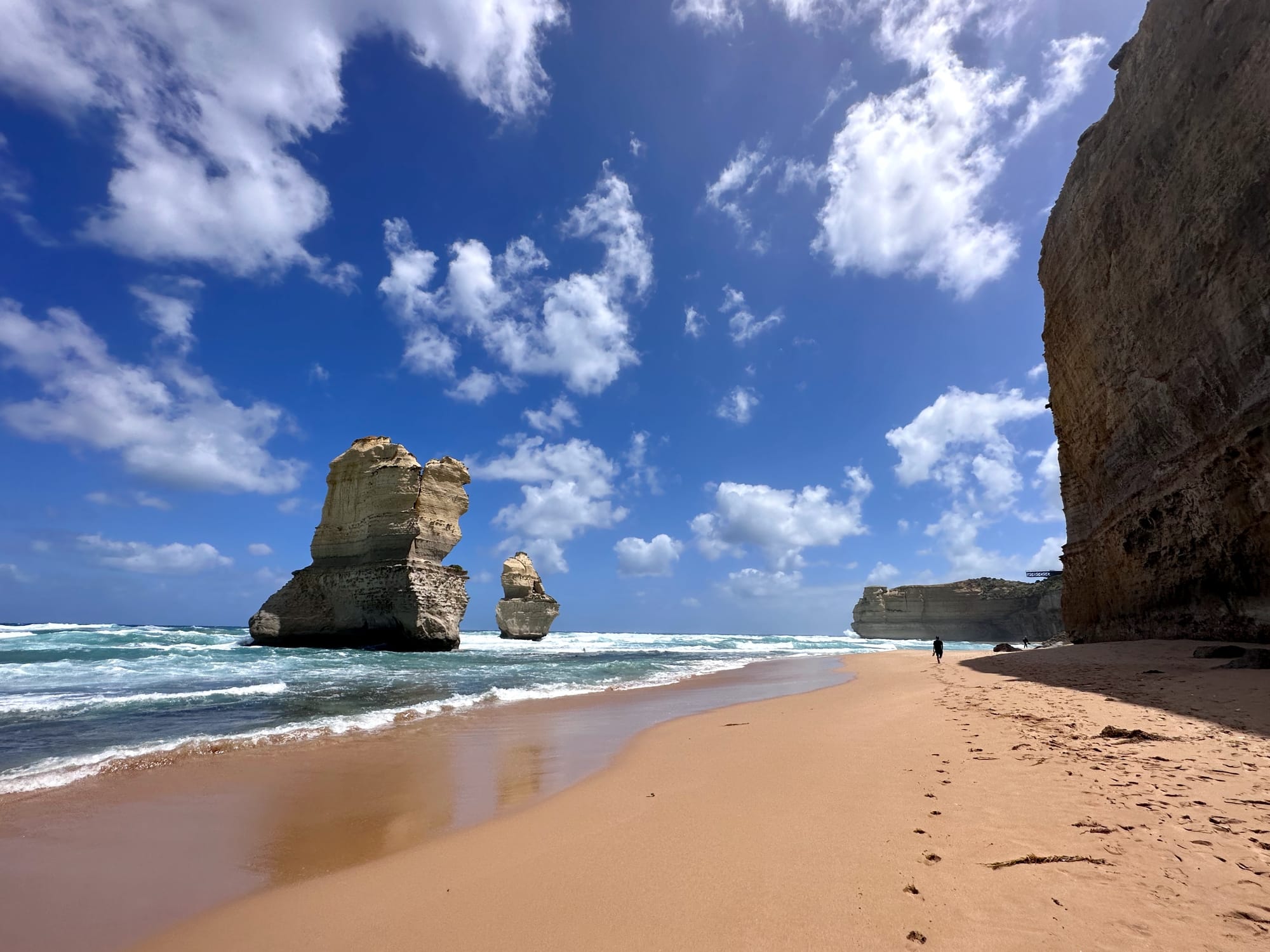
Gibson Steps Beach—the Apostles' view, at sea level
An 86-step staircase leads down to a two-kilometre beach with two sea stacks, Gog and Magog, just offshore. The only beach-level view of the formations on this stretch, and rarely crowded. Check the tide before descending.
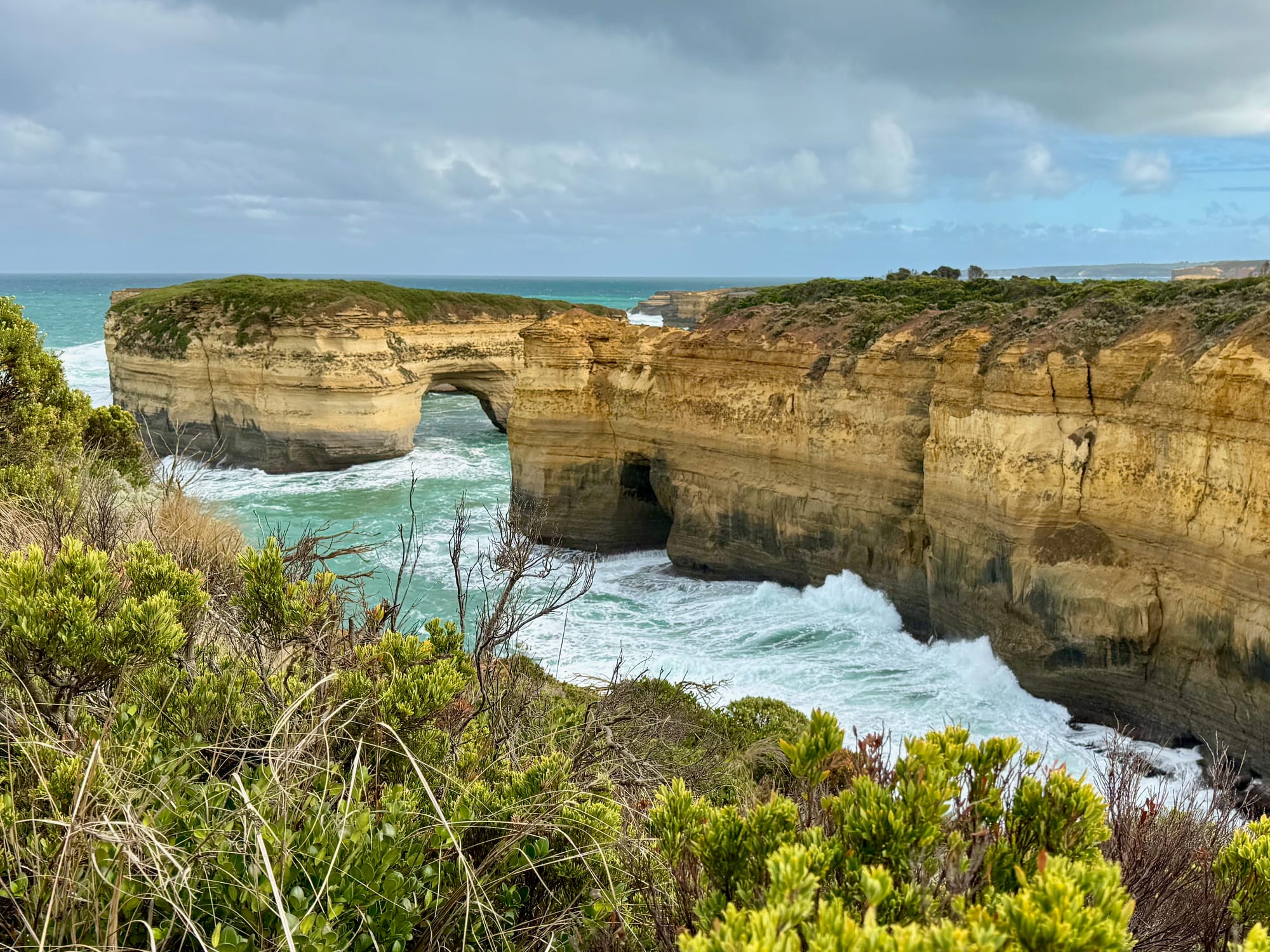
Port Campbell National Park—five lookouts, arm's-reach geology
Five lookouts—Loch Ard Gorge, The Razorback, Island Arch, Tom and Eva, and The Grotto—each a short, flat track from its own car park. All free. The 1878 Loch Ard shipwreck gave three of them their names.
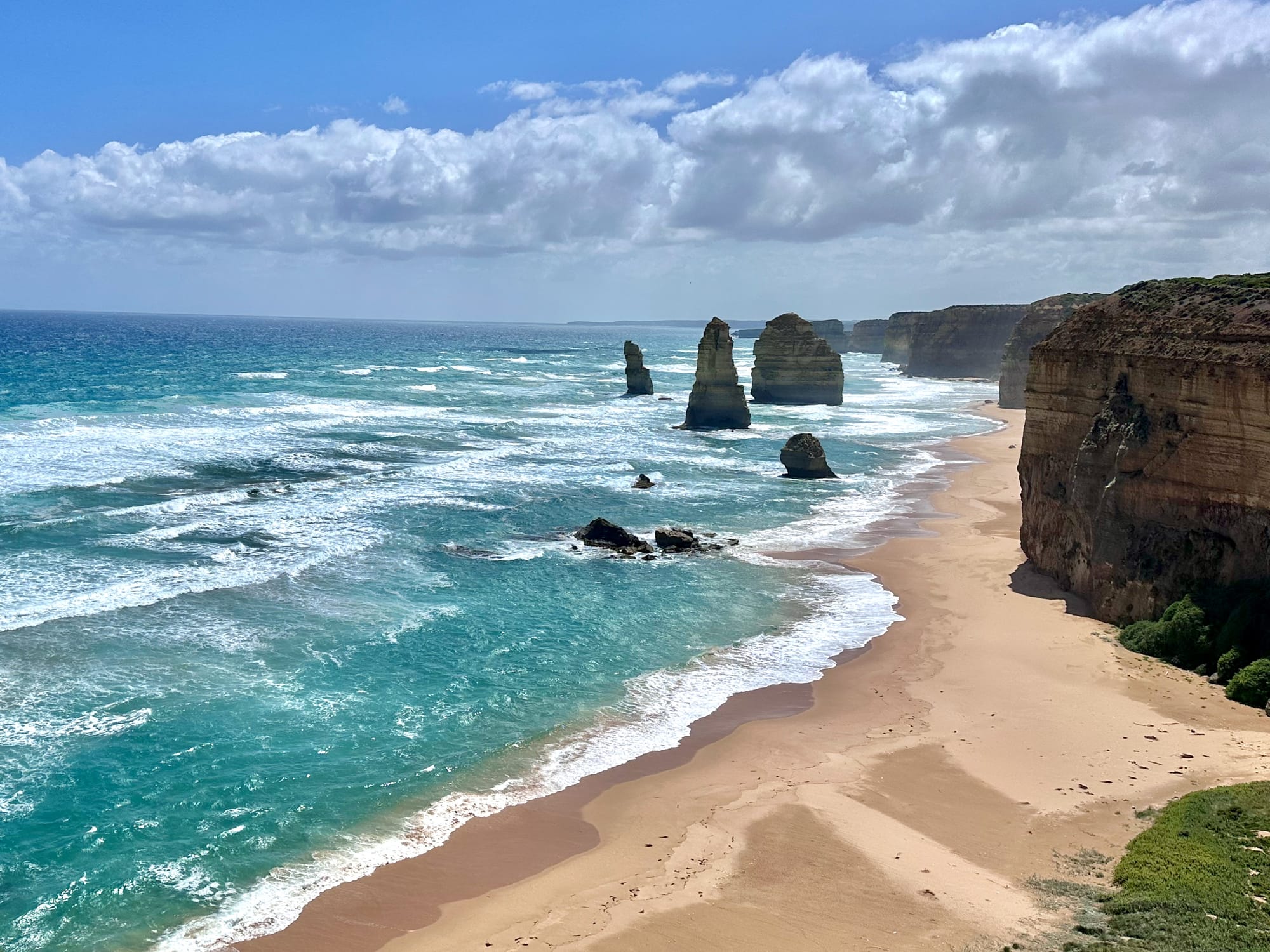
The 12 Apostles—the icon, best at first light
The most famous stop and the most crowded, at roughly two million visitors a year. Eight stacks still stand. Go at dawn for the best light and the emptiest platform, then spend the rest of the day on the quieter stops on either side.


