

California 2026-27 budget: Lawmakers have a deal—but Newsom hasn't signed yet
The Legislature met its June 15 deadline and sent a spending plan to the governor. But the job isn't finished.


California's Legislature approved a 2026-27 state budget late Monday, hitting the June 15 constitutional deadline that lawmakers must meet or forfeit their pay. But anyone refreshing the state's budget website for the final, signed plan will be waiting a while longer: Gov. Gavin Newsom hasn't signed it, and negotiations are only just beginning.
That gap—between a budget the Legislature passes and a budget the governor enacts—is the source of a lot of confusion this time of year. Here's what actually happened, and what's still to come.
Sources & References
- EdSource—California lawmakers pass budget with billions more for education as Newsom negotiations begin (June 15, 2026)
- Senator John Laird (SD-17)—Budget Agreement Announced by California Legislative Leaders (June 11, 2026)
- Bond Buyer—California lawmakers advance 2026-27 budget agreement (June 15, 2026)
- Office of Gov. Gavin Newsom—Governor Newsom announces revised budget that eliminates California's deficit (May 14, 2026)
- California Legislature—Assembly Bill 109 (2026-27 Budget)
- California Department of Finance—ebudget.ca.gov
- California Budget & Policy Center—First Look: Understanding the Governor's 2026-27 May Revision
What just happened
On Monday, June 15, the state Senate approved the main budget bill, Assembly Bill 109, on a 28-9 vote, with the Assembly following late that night, 59-18. The vote came four days after Senate President pro Tempore Monique Limón and Assembly Speaker Robert Rivas announced a joint legislative budget agreement on June 11.
Crucially, that was a two-party deal—between the two houses of the Legislature, not with the governor. As the trade publication Bond Buyer reported, the companion bills (AB 109 and SB 109) "set the stage for up to two weeks of budget negotiations between the Legislature and the governor," with later amendments expected to reflect a future "three-party" deal.
Why the "enacted" budget isn't official yet
In California, passing a budget by June 15 is a constitutional requirement that protects lawmakers' paychecks—but it is not the finish line. Legislators routinely pass a placeholder plan on deadline and then amend it through follow-up "budget bill junior" measures once they reach a final agreement with the governor, all before the new fiscal year begins July 1.
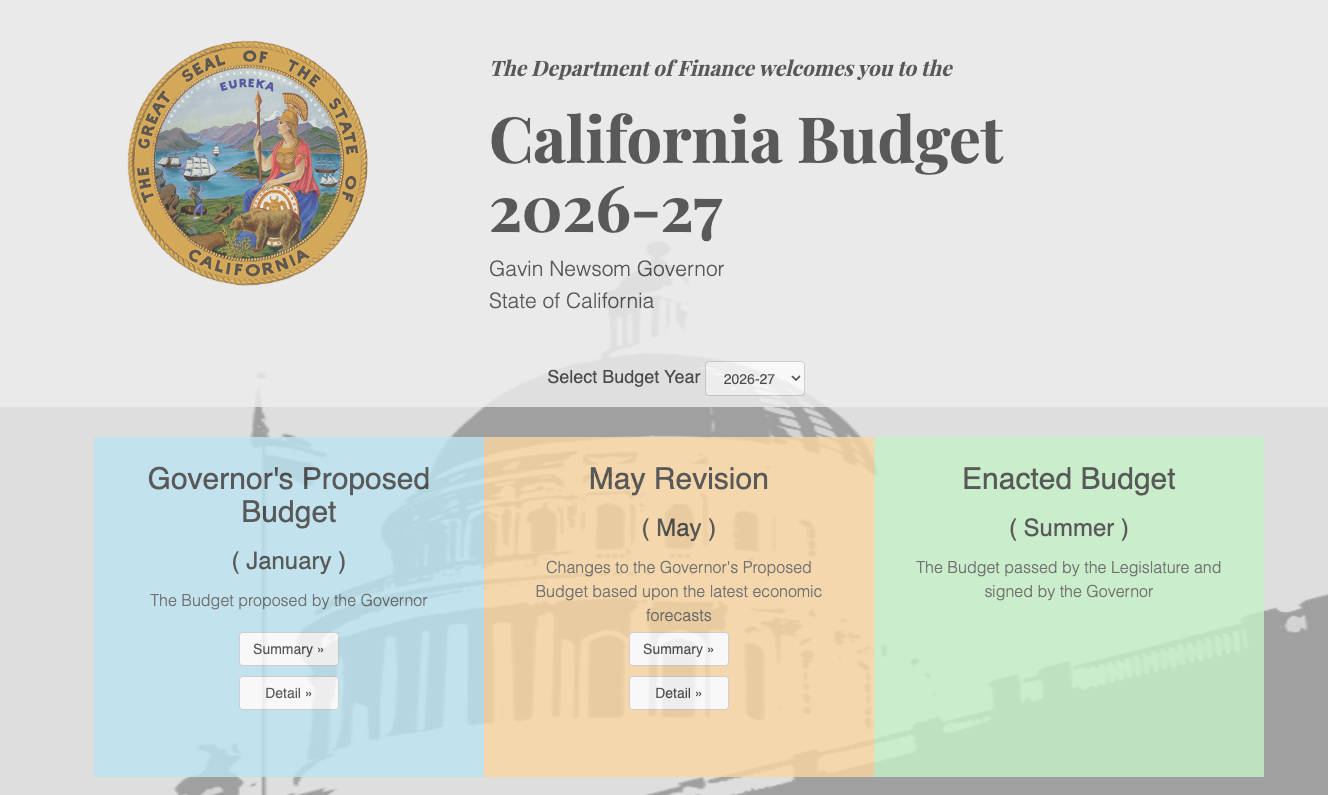
That's why the "Enacted Budget" panel on the Department of Finance's ebudget.ca.gov is still grayed out. The enacted budget summary only posts there after the governor signs—the way the 2025-26 enacted budget now lives under the site's prior-year archive. Until Newsom signs, what exists is a Legislature-passed bill and a published legislative agreement—not an enacted budget.
What's in the legislative deal
The Legislature's plan largely tracks Newsom's spring proposal but adds spending by assuming roughly $5 billion more in revenue than the governor forecast. Leaders say it balances the budget across two fiscal years, cuts the structural deficit in half, and keeps billions in reserves, according to the agreement summary.
On policy, the deal leans hard into protecting safety-net programs from federal cuts. It rejects the governor's proposed cuts to In-Home Supportive Services and a new Medi-Cal asset test, delays a string of Medi-Cal dental and clinic reductions, and authorizes up to $190 million in loans for distressed hospitals. It puts $900 million toward local homelessness programs ($400 million above Newsom's number), $500 million into the low-income housing tax credit, and $100 million into food banks. It funds about 22,770 new child care slots and roughly $375 million to implement Proposition 36. To pay for it, lawmakers adopt the governor's corporate tax-credit limit, a digital-software sales tax change, and a renewed tax on health plans, while laying groundwork for a "Fair Share from Big Corporations Act."
The $3.9 billion school-funding fight
The thorniest unresolved issue is education. The Legislature's budget delivers a record $127 billion for schools and community colleges under Proposition 98, including a $2.4 billion ongoing boost to special education. But, as EdSource reported, lawmakers appear to be accepting Newsom's plan to withhold $3.9 billion in Prop. 98 money until forecast revenue—much of it tied to taxes on AI-driven stock gains—actually arrives. They want a firm repayment timetable.
Education groups including the California Teachers Association and the California School Boards Association call the maneuver a manipulation of the minimum school-funding guarantee and have threatened to sue. "This bill shortchanges our districts $3.9 billion they need right now, not in future budget years," said Assemblywoman Laurie Davis, R-Laguna Niguel, who voted no.
How we got here
The road to this point ran through Newsom's May Revision, released May 14—a $246.6 billion General Fund plan the administration billed as eliminating the structural deficit to $0 through July 2028. The revision actually trimmed General Fund spending by $1.8 billion from January, banked nearly $30 billion in total reserves, and set aside close to $10 billion in a surplus holding account against future volatility.
"California is proof that fiscal discipline and progressive values go hand in hand. We're balancing the budget, eliminating the deficit, cutting spending, and building reserves."
—Gov. Gavin Newsom, May Revision announcement
Lawmakers, citing a brighter revenue picture, used that headroom to soften cuts. "California is ready—and California won't back down," Rivas said in announcing the legislative agreement, framing it as a response to federal reductions to Medicaid and food assistance.
What happens next
Expect roughly two weeks of intensive bargaining between legislative leaders and the Newsom administration over the open items—the education deferral, climate and wildfire funding tied to cap-and-trade and Proposition 4, and more. Once a final three-party deal is struck, lawmakers will amend the budget bills, send them to the governor, and Newsom will sign—at which point the official enacted budget will post to ebudget.ca.gov. The target, as always, is on or about July 1, when the 2026-27 fiscal year begins.
This is a developing story and will be updated when the governor signs the enacted budget.
Frequently asked questions
Did California pass its 2026-27 budget?
The Legislature passed the main 2026-27 budget bill (Assembly Bill 109) on June 15, 2026, meeting its constitutional deadline. But Gov. Gavin Newsom had not yet signed it into law, so the budget is not yet enacted.
Why isn't the enacted budget posted on ebudget.ca.gov yet?
The enacted budget summary only posts to ebudget.ca.gov after the governor signs the budget. As of mid-June 2026, lawmakers and the Newsom administration were still negotiating a final agreement, so the "Enacted Budget" panel remained inactive.
What is the $3.9 billion school-funding fight about?
Newsom wants to defer $3.9 billion in Proposition 98 education funding until projected revenue—largely tied to taxes on AI-driven stock gains—materializes. Education groups call it a manipulation of the school-funding guarantee and have threatened to sue. Lawmakers are pushing for a firm repayment schedule.
When will Newsom sign the California budget?
Lawmakers can amend the budget through agreements with the governor before the new fiscal year begins July 1, 2026. A final signed budget is typically completed around late June, with the governor holding several days to act after a bill reaches his desk.


